Blog

Ready, Set, Move!

Get expert moving advice and packing tips from our Clean and Careful movers.

Avoid 7 Common Mistakes During Your Residential Move

Moving to a new home should feel exciting – a fresh start, new opportunities, and different surroundings to explore. Without proper preparation, though, that excitement quickly transforms into stress, frustration, and unexpected expenses.

Small mistakes compound during relocations. Forgotten tasks create last-minute scrambles. Poor planning leads to damaged belongings or missed deadlines. Inadequate research results in choosing unreliable movers or paying inflated rates.

The good news? Most residential move mistakes are entirely preventable. Understanding common pitfalls before they occur lets you sidestep problems that derail countless relocations each year. Here’s how to avoid the 7 most frequent moving mistakes and enjoy a smooth transition to your new home.

1) Underestimating How Much Time You’ll Need

The most common moving mistake is a miscalculation of the timeline. People consistently underestimate how long packing takes, assuming they can pack an entire household in a weekend or during a few evening sessions after work.

Reality proves far different. A typical three-bedroom house contains thousands of items requiring careful wrapping, boxing, and labeling. Kitchen cabinets alone hold dozens of dishes, glasses, and small appliances. Closets overflow with clothing, shoes, and accessories. Garage and storage areas accumulate years of possessions.

Start preparing at least four to six weeks before your moving date. This timeline allows systematic progress without overwhelming rush or exhaustion. Break the process into manageable daily or weekly goals rather than attempting everything at once.

Create a detailed moving checklist covering every task from initial planning through final unpacking. Include deadlines for:

  • Researching and booking moving companies.
  • Gathering packing supplies.
  • Starting room-by-room packing.
  • Notifying utility companies and service providers.
  • Updating addresses with key contacts.
  • Scheduling final walkthroughs and cleanings.

Working from a comprehensive checklist prevents forgotten tasks and provides clear progress markers. Crossing completed items off your list creates momentum and reduces anxiety about remaining work.

Consider taking time off work during your final packing week and moving day. Attempting to pack after exhausting workdays while maintaining everyday responsibilities sets you up for failure.

2) Forgetting to Label Boxes Properly

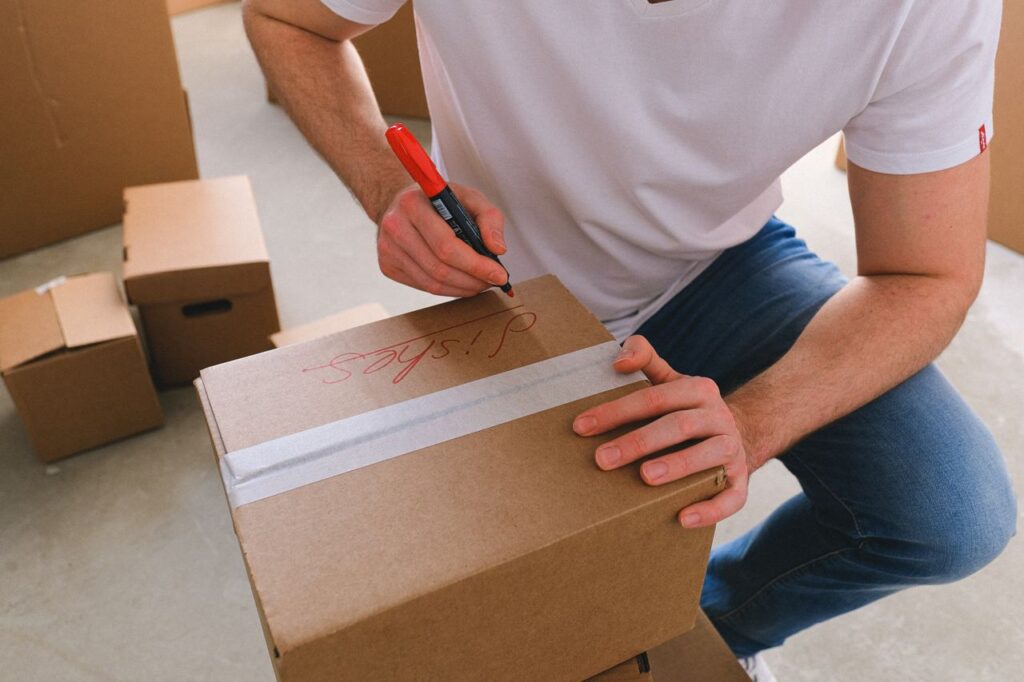
Few moving mistakes create more unpacking chaos than unlabeled or poorly labeled boxes. Imagine arriving at your new home with 50 identical brown boxes stacked in your living room. Which contains your coffee maker? Where are the bed linens? Which box holds your work laptop?

Without clear labeling, unpacking becomes an organized process, turning into a frustrating treasure hunt. You’ll open multiple boxes searching for single items, creating a mess and wasting precious time when you should be settling in.

Label each box on multiple sides, such as the top and at least two adjacent sides. This ensures that labels remain visible regardless of how boxes stack in the moving truck or your new home.

Include two critical pieces of information:

  • Destination room – Write the specific room where the box belongs (Master Bedroom, Kitchen, Kids’ Bathroom). Avoid vague labels like Bedroom when you have multiple sleeping areas.
  • General contents – List major items or categories (Pots and Pans, Winter Clothes, Office Supplies). You don’t need exhaustive inventories, but general descriptions help prioritize unpacking.

Consider implementing a color-coding system using colored tape or markers. Assign each room a specific color, such as blue for the master bedroom, red for the kitchen, and green for the living room. Visual identification enables movers to place boxes correctly without having to read every label.

Number your boxes and maintain a corresponding master inventory list. This system helps track everything during the move and simplifies locating specific items later. If box 47 contains your tool collection, your inventory sheet tells you exactly where to find it.

3) Skipping the Decluttering Stage

Moving provides the perfect opportunity to evaluate your possessions and eliminate items you no longer want or need. Many people skip this step, though, packing everything they own without considering whether they should.

Why pay to move things destined for eventual disposal? Every item you pack requires materials, time, and truck space. Unnecessary belongings increase moving costs while adding work at both ends of your relocation.

Schedule dedicated decluttering sessions at least three to four weeks before your move. Work through your home room by room, making honest assessments about each item’s value and utility.

Ask yourself key questions:

  • Have I used this in the past year?
  • Does it work properly, or does it need repairs that I’ve been postponing?
  • Do I have duplicates serving the same function?
  • Will this item fit or make sense in my new home?
  • Am I keeping this for practical reasons or just guilt?

Sort items into clear categories: keep, donate, sell, recycle, or trash. Be ruthless in your evaluations. That bread maker you received five years ago but never used won’t suddenly become useful in your new kitchen.

Donate usable items to local charities. Organizations like Goodwill, The Salvation Army, and community shelters welcome clothing, furniture, housewares, and toys in good condition. Many offer pickup services for large items, saving you the hassle of transportation.

Sell valuable items through online marketplaces like Craigslist, Facebook Marketplace, or OfferUp. Hosting a garage sale is another option, although online sales typically generate better returns with less effort.

Fewer items mean less packing time, lower moving costs, and easier unpacking. Your new home starts fresh rather than cluttered with possessions you don’t actually want.

4) Hiring Movers Too Late (or Choosing the Wrong Company)

Booking professional movers at the last minute creates multiple problems. Peak moving seasons run from May through September, with weekends and month-end dates filling quickly. Waiting too long leaves you with limited options, higher rates, or no availability at all.

Start researching moving companies at least four to six weeks before your target moving date, especially during busy seasons. Last-minute booking often means accepting whoever has availability rather than choosing the best company for your needs.

Compare multiple moving companies before deciding. Look beyond price alone, although transparent, competitive pricing certainly matters. Consider:

  • Licensing and insurance – Verify companies hold proper state and federal licenses. California movers need CPUC licensing, while interstate movers require USDOT registration. Confirm that adequate insurance coverage protects your belongings.
  • Review and reputation – Read recent customer reviews on Google, Yelp, and the BBB (Better Business Bureau). Look for patterns in feedback regarding punctuality, professionalism, damage handling, and hidden fees.
  • Services offered – Make sure that companies provide the specific services you need, whether packing assistance, specialty item handling, storage options, or long-distance capabilities.
  • Clear communication – Professional companies respond promptly to inquiries, provide detailed written estimates, and answer questions thoroughly. Poor communication before hiring predicts problems during your move.

Choose trusted professionals like Clean & Careful Moving for reliable services and transparent pricing. Our licensed, insured team serves Orange County with straightforward rates, no hidden fees, and genuine care for every relocation we handle.

Avoid companies that demand large deposits, provide estimates without seeing your belongings, lack physical addresses, or offer prices dramatically lower than competitors’. These red flags often indicate scams or substandard service.

5) Not Protecting Fragile or Valuable Items

Inadequate packing materials and careless protection lead to broken dishes, shattered picture frames, damaged electronics, and destroyed family heirlooms. Weak boxes, insufficient cushioning, and improper packing techniques create wholly preventable damage.

Invest in quality packing materials. Sturdy boxes designed for moving withstand stacking and handling far better than free grocery store boxes. New boxes provide clean, undamaged containers, free of mysterious stains or weakened structures.

Use appropriate box sizes for different items. Pack heavy objects like books into small boxes to prevent overweight containers that become difficult to lift or prone to bottom failure. Reserve large boxes for lightweight, bulky items like bedding or pillows.

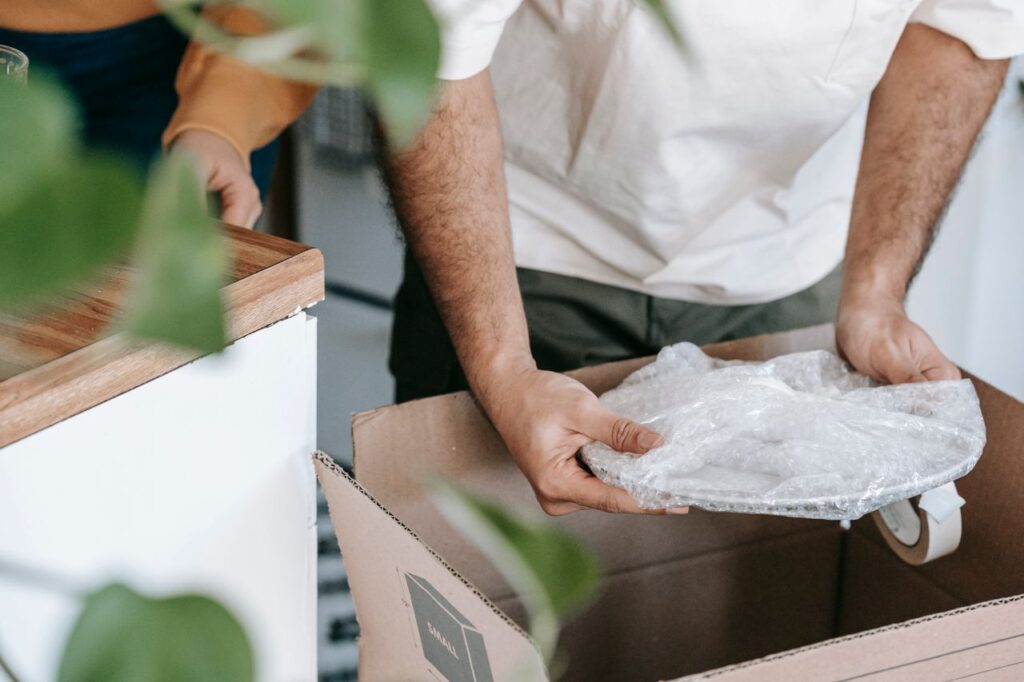
Wrap fragile items individually with bubble wrap, packing paper, or foam sheets. Never simply toss items together in boxes without protective cushioning. Fill empty spaces with crumpled paper or packing peanuts to prevent shifting during transport.

Clearly mark boxes containing fragile items on all sides using bold, visible labels. Write FRAGILE in large letters or use bright colored tape to signal special care requirements. Inform your movers about any boxes that require gentle handling.

Consider professional packing services for particularly valuable or delicate items. Experienced packers understand proper techniques for protecting artwork, antiques, electronics, and other items that require specialized attention.

Create an inventory of valuable possessions, including photographs documenting their condition before moving. This documentation supports insurance claims if damage occurs despite proper precautions.

6) Forgetting to Update Addresses and Utilities

Failing to update your address or transfer utilities creates headaches ranging from missed bills and delayed mail to arriving at a dark house without heat, water, or internet.

Notify the postal service at least two weeks before moving. USPS mail forwarding provides temporary solutions while you update individual accounts, but it doesn’t catch everything. Magazines, packages, and some official correspondence may not forward properly.

Update your address with the following:

  • Banks and credit card companies.
  • Insurance providers (home, auto, health, life).
  • Employer payroll and HR departments.
  • State and federal tax agencies.
  • Voter registration and DMV.
  • Medical providers and pharmacies.
  • Subscription services and online retailers.

Contact utility companies two to three weeks before moving to schedule disconnection at your old home and activation at your new address. Arrange for electricity, gas, water, and internet service to begin the day you arrive. Testing systems before moving day prevents unpleasant surprises.

Schedule internet and cable installation appointments early, as providers often book weeks in advance, and delays leave you without connectivity during critical setup periods.

Keep a master list of every account requiring an address update. Check off each one as you complete notifications, ensuring that nothing slips through the cracks.

7) Ignoring Moving Day Essentials

The chaos of moving days makes even simple tasks feel complicated. If your coffee maker sits buried in an unlabeled box somewhere in the moving truck, your morning routine suffers. When your phone charger gets lost in the packing materials, staying connected becomes impossible.

Pack a first-night box containing essentials you’ll need immediately upon arrival at your new home before unpacking everything else. This box should include:

  • Toiletries and medications.
  • Phone chargers and electronic essentials.
  • Snacks and basic breakfast items.
  • Toilet paper and paper towels.
  • Trash bags and cleaning supplies.
  • Basic tools (screwdriver, scissors, box cutter).
  • Bed linens, pillows, and towels.
  • Change of clothes for everyone.

Keep this box in your personal vehicle rather than the moving truck. You want guaranteed access regardless of when movers arrive or how long unloading takes.

Maintain separate bags for documents and valuables. Don’t pack passports, birth certificates, financial records, or irreplaceable sentimental items with regular household goods. Keep these possessions with you throughout the move.

Prepare a folder with important information: new home address, moving company contact details, utility company numbers, and emergency contacts. Having this information readily available prevents frantic searching during stressful moments.

Set aside medications, prescription glasses, and first aid supplies. Medical needs don’t pause during relocations, and these items require immediate access.

Final Thoughts – Turn Your Move into a Smooth Transition

Successful moves require planning, organization, and patience. Avoid rushing through preparation steps that seem unimportant. The time invested in proper planning pays dividends through reduced stress, fewer problems, and smoother transitions.

Start early, giving yourself adequate time for every stage. Declutter ruthlessly, eliminating possessions that no longer serve your needs. Label systematically, creating organization that simplifies unpacking. Protect your belongings effectively with high-quality materials and careful craftsmanship. Update addresses and utilities promptly to ensure seamless transitions. Pack essentials separately for immediate access.

Most importantly, choose professional movers you can trust. Let Clean & Careful Moving handle the heavy lifting so you can focus on settling into your new home. Our experienced team brings expertise, efficiency, and genuine care to every relocation we handle throughout Orange County.

We appreciate that moving is more than transporting boxes from one address to another. It’s a major life transition that deserves professional attention and personal consideration.

  • Call us: (949) 375-4629
  • Email us: cleancarefulmoving@gmail.com

We serve all of Orange County, CA, and the surrounding areas. Let us move you safely, efficiently, and stress-free.

The Ultimate Office Move Checklist: A Step by Step Guide

How to Pack Dishes for Moving Safely

Do You Need a TV Box to Move? A Complete Guide to Safe TV Transport

Moving a television demands more attention than almost any other household item. Modern flat-screen TVs are expensive and physically fragile. A single crack, pressure point, or jostle during transport can render a $1,000 television completely unusable.

Many people discover this reality too late. They wrap their TV in blankets, secure it with tape, and load it into a moving truck alongside furniture and boxes. Upon arrival, they find spider-web cracks across the screen or internal damage that prevents the display from functioning. These scenarios occur with alarming frequency during residential relocations.

The question of whether you need a TV box for moving depends on several factors: the distance of your move, the size and value of your television, the available packing materials, and your tolerance for risk. This guide examines the science behind TV protection, explores your packing options, and helps you make a more informed decision about safeguarding your electronics during a move.

Why a TV Box Matters

Television manufacturers design original packaging with precise engineering specifications. These boxes incorporate multiple protective layers: corner guards that absorb impact, foam inserts that prevent screen flexing, and structural reinforcement that distributes external pressure away from the display panel.

The screen itself is the most vulnerable component. Modern LED and OLED displays consist of millions of microscopic light-emitting diodes arranged in precise patterns. These components sit beneath glass or plastic layers that can crack under relatively modest pressure. Unlike older cathode ray tube televisions with thick glass screens, contemporary flat panels offer minimal inherent protection.

When you purchase a television, the manufacturer assumes it will travel hundreds or thousands of miles in trucks, trains, and shipping containers. The original box accounts for this journey. By contrast, DIY alternatives like blankets, bubble wrap, or cardboard rarely provide equivalent protection.

Consider the physics involved. During transport, a television experiences multiple types of stress: direct impact from adjacent items, vibration from road travel, and pressure from items stacked above. A properly designed TV box addresses each of these threats through strategic material placement and structural engineering.

Comparing a purpose-built TV box to makeshift alternatives reveals substantial differences. A moving blanket draped over a screen might prevent scratches but offers minimal protection against pressure or impact. Bubble wrap provides cushioning but lacks structural rigidity. Standard cardboard boxes rarely fit televisions precisely, allowing movement inside the container that can lead to damage.

Types of TV Boxes and Packing Kits

The television moving supply market offers several specialized solutions designed to address different screen sizes and moving scenarios.

Adjustable TV boxes are the most versatile option. These telescoping containers feature panels that slide to accommodate screens ranging from 32 to 80 inches. The adjustability eliminates gaps between the television and container walls, reducing movement during transport. Quality adjustable boxes include foam corner protectors and edge guards that shield the most vulnerable screen areas.

Specialty foam kits provide targeted protection without requiring a full box. These systems typically include pre-cut foam pieces designed to cover the screen face, protect corners, and cushion edges. Professional movers frequently combine foam protection with stretch wrap and cardboard sheets to create custom protection systems for non-standard television sizes.

Screen protector panels offer an intermediate solution. These rigid foam or plastic sheets cover just the display surface, protecting against scratches and direct pressure. When combined with blankets and strategic placement in a moving vehicle, screen protectors can provide adequate protection for short-distance moves.

Some moving companies offer complete television packing kits that bundle boxes, foam inserts, corner guards, and specialized tape. These comprehensive solutions remove guesswork from the packing process while ensuring that all necessary components work together effectively.

How To Pack a TV Safely

Proper television packing requires methodical attention to detail and appropriate materials. Following a systematic process significantly reduces the risk of transport damage.

Cable management is the essential first step. Photograph cable connections before disconnecting anything. This documentation proves invaluable during setup at your new location. Coil cables loosely and secure them with twist ties rather than tight rubber bands that can damage wire insulation over time. Store remote controls, mounting hardware, and accessories in labeled bags taped to the television stand or packed separately in clearly marked boxes.

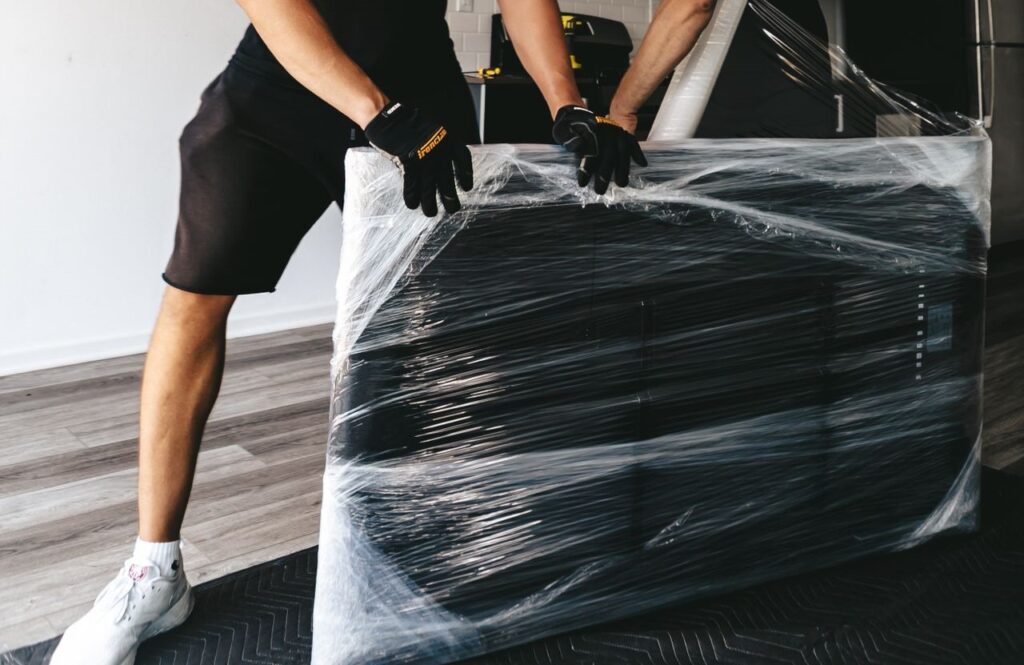
Screen protection demands particular care. Place a soft microfiber cloth directly against the display to prevent scratches. Layer bubble wrap over the cloth, securing it with painter’s tape applied only to the television’s back and edges, never directly on the screen or bezel. The bubble wrap should extend several inches beyond the screen perimeter to protect vulnerable corners.

Structural support comes next. If using an original or adjustable box, position foam corner protectors first. Slide the wrapped television into the box, ensuring even spacing on all sides. Fill any remaining gaps with foam sheets, packing paper, or air pillows. Avoid newspapers, as ink can transfer to surfaces. The television should fit snugly enough that it cannot shift but not so tightly that the box exerts pressure on the screen.

Labeling completes the packing process. Mark the box “FRAGILE” on all sides using a bold, permanent marker. Add “THIS SIDE UP” arrows indicating proper orientation. Include “GLASS – HANDLE WITH CARE” and “FLAT SCREEN TV” to ensure everyone handling the box understands its contents and fragility.

Professional assistance offers an alternative to DIY packing. Experienced movers have specialized knowledge about television vulnerabilities and appropriate protection methods. They maintain inventory of properly sized boxes and professional-grade packing materials. Most importantly, professional movers carry insurance covering electronics damage during transport, providing financial protection beyond what homeowner’s insurance typically offers.

Can You Move Without a TV Box?

Short-distance relocations present scenarios where television boxes might prove unnecessary. If you’re moving items yourself across town using a personal vehicle, alternative methods can work effectively with careful execution.

For moves under 10 miles with minimal handling, wrap the television in moving blankets, secure the blankets with stretch wrap, and place the TV in your vehicle’s back seat or secured upright in a cargo area. Position the screen facing away from any hard surfaces. Avoid laying the television flat, as this orientation concentrates weight on the screen and increases crack risk.

The dangers of moving without proper boxes increase proportionally with distance and handling frequency. Long-distance moves involve more opportunities for impact, pressure, and vibration. Each time someone picks up an unboxed television, they risk applying excessive pressure to vulnerable screen areas. Professional moving trucks stack items efficiently to maximize space, which can place unprotected televisions at risk from shifting cargo.

Weather introduces another variable. Rain, snow, or extreme temperatures can damage electronics. While a TV box won’t make a television waterproof, it provides an additional protective barrier against moisture and insulation against temperature extremes.

Consider the replacement cost equation. A quality adjustable TV box costs $30 to $60. A 65-inch television replacement runs $500 to $2,000. Even if box-free moving has a 95% success rate, the 5% risk of total loss makes the protective investment financially prudent.

Professional TV Packing Services

Hiring experienced movers to handle television transport eliminates risk while saving time and reducing stress. Professional moving companies bring expertise developed through thousands of successful relocations.

At Clean & Careful Moving, our team uses industry-standard packing protocols specifically designed for electronics protection. We maintain an inventory of properly sized boxes, professional-grade foam inserts, and specialized protective materials that provide superior safeguarding compared to consumer-grade alternatives.

Our movers receive training in proper television handling techniques. They understand how to distribute weight, avoid pressure points, and position screens to minimize transport stress. This expertise proves particularly valuable for large-format displays exceeding 65 inches, which require two-person handling and careful maneuvering through doorways and staircases.

The insurance coverage professional movers carry provides additional peace of mind. While we take every precaution to prevent damage, comprehensive moving insurance protects your investment if the unexpected occurs. This protection typically exceeds standard homeowner’s policy coverage for items damaged during DIY moves.

Professional packing services also address the logistical challenges of television transport. Our team handles disassembly of wall mounts, proper cable management, and precise reassembly at your new location. This comprehensive approach ensures your entertainment system functions perfectly from the moment you arrive.

Protecting Your Investment

Television technology has advanced dramatically, but so has screen fragility. The same engineering that produces stunning 4K images and ultra-thin profiles also creates vulnerability during transport. Investing in appropriate protection, whether through quality packing supplies or professional moving services, prevents expensive damage and preserves your home entertainment investment.

The decision between DIY packing with proper materials and professional assistance depends on your specific circumstances: television size and value, move distance, available time, and comfort level with handling delicate electronics. For valuable screens or long-distance relocations, professional expertise provides optimal protection and peace of mind.

Need expert help moving your TV and other electronics? Clean & Careful Moving specializes in safe, efficient transportation of your most valuable possessions throughout Orange County and beyond. Our experienced team ensures your television arrives in perfect working condition.

  • Call us – (949) 375-4629
  • Email us – cleancarefulmoving@gmail.com

Let our team handle your electronics with the care and expertise they deserve.

The Ultimate Office Move Checklist: A Step by Step Guide

How to Pack Dishes for Moving Safely

How to Pack Clothes for Moving: A Step-by-Step Guide

Packing clothes ranks among the most underestimated challenges when relocating. Unlike furniture or dishes, clothing demands strategic handling to prevent wrinkles, protect delicate fabrics, and maintain organization throughout the transition. Whether you’re moving across Orange County or to another state, understanding proper garment packing techniques saves time, reduces stress, and ensures that your wardrobe arrives in pristine condition.

Step 1: Sort and Declutter Your Wardrobe

Begin your packing process by critically evaluating every item in your closet. Moving is an ideal opportunity to streamline your wardrobe, potentially reducing moving costs and unpacking time.

Ask yourself these questions for each garment: Have I worn this in the past year? Does it still fit properly? Is it in good condition? If you answer no to any question, consider removing that item from your moving load.

Effective decluttering strategies include:

  • Seasonal evaluation – Set aside winter coats when moving in summer, or beach attire when relocating in winter. These items can be packed early without disrupting daily life.
  • Donation coordination – Contact local charities like Goodwill or The Salvation Army in Orange County to schedule pickup of unwanted clothing.
  • Resale opportunities – List quality items on platforms like Poshmark or Facebook Marketplace to offset moving expenses.

Step 2: Choose the Right Packing Method

Choosing appropriate packing materials impacts both garment protection and unpacking efficiency. Different clothing types require different approaches.

Wardrobe boxes

Professional wardrobe boxes feature built-in hanging bars, allowing direct transfer of hanging garments from closet to box. This method works exceptionally well for suits, dresses, and formal wear requiring wrinkle prevention. At Clean & Careful Moving, we provide wardrobe boxes that accommodate roughly 24 inches of hanging space.

Suitcase and luggage

Maximize existing resources by filling suitcases with folded clothing. Rolling suitcases facilitate transport and provide built-in organization. Pack heavier items like jeans and sweaters in wheeled luggage to reduce strain during loading.

Vacuum storage bags

These space-saving solutions compress bulky items like winter coats and comforters. However, avoid using vacuum bags for delicate fabrics or items requiring shape retention. Extended compression can damage some materials and create permanent creases.

When deciding whether to hang or fold, consider the fabric type and garment value. Hang formal wear, structured jackets, and easily wrinkled materials. Fold casual clothing, activewear, and sturdy fabrics like denim.

Step 3: Pack by Material and Season

Organization by fabric type and seasonal use streamlines packing and unpacking processes.

Protecting delicate fabrics

Silk, cashmere, and other luxury materials need specialized handling. Wrap these items in acid-free tissue paper before packing to prevent snags and discoloration. Place delicate garments in separate boxes labeled “Fragile” to ensure careful handling during transport.

For valuable items like wedding dresses or vintage clothing, consider professional dry cleaning before moving. This removes oils and stains that might set during storage and provides additional protective wrapping.

Maintaining seasonal accessibility

Pack out-of-season clothing first, storing these boxes in less accessible areas of the moving truck. Keep current-season essential at hand for immediate use upon arrival. Create a clearly labeled “First Day” box containing:

  • Several days of comfortable clothing.
  • Undergarments and sleepwear.
  • Weather-appropriate outerwear.
  • Exercise clothing if you maintain a fitness routine.

This approach prevents frantic searching through multiple boxes during your first hectic days in the new location.

Step 4: Label and Organize Boxes

Proper labeling turns chaotic unpacking into systematic organization. Invest time in detailed box identification to accelerate settling into your new home.

Effective labeling strategies

Each box should include multiple information points:

  • Content description.
  • Destination room.
  • Owner’s name (in multi-person households).
  • Priority level.

Use waterproof markers or printed labels to avoid smudging during transport.

Color-coding adds visual organization. Assign each family member a color, marking their boxes with corresponding tape or labels. This system proves especially valuable when moving with children who want to locate their belongings quickly.

Consider photographing box contents before sealing for reference during unpacking. These images are helpful when searching for specific items without opening every container.

Step 5: Prevent Wrinkles and Damage

Proper packing techniques preserve garment condition throughout the moving process.

Rolling vs. folding

Rolling works well for casual clothing, T-shirts, and pants. This technique minimizes wrinkles while maximizing box space efficiency. Fold garments lengthwise, then roll tightly from bottom to top. Rolled items fit compactly and remain visible when stacked vertically in boxes.

Folding suits structured garments like button-down shirts and blazers. Use the dry cleaner fold method: button all buttons, fold arms behind the back, then fold in half. Place folded items flat in boxes with the heaviest pieces on the bottom.

Additional protection methods

Insert tissue paper between folded layers to prevent friction creases. Garment bags provide excellent protection for hanging items during transport. For particularly valuable pieces, consider acid-free tissue paper, which prevents yellowing and deterioration.

Stuff structured items like hats and purses with packing paper to maintain shape. Never overfill boxes as compressed clothing develops stubborn wrinkles that require extensive steaming or ironing after unpacking.

Pro Tip: Hire Movers Who Handle Clothing with Care

Professional moving services like Clean & Careful Moving transform time-consuming clothing relocation into streamlined efficiency. Our experienced team understands fabric requirements and packing best practices, ensuring that your wardrobe receives appropriate care throughout the moving process.

Professional movers provide several advantages for clothing relocation:

  • Specialized equipment access – Wardrobe boxes, garment racks, and protective materials come standard with full-service moving packages.
  • Efficient packing techniques – Trained professionals pack clothing faster and more effectively than most individuals, potentially reducing overall moving time by several hours.
  • Damage prevention expertise – Our team knows which items require special handling and applies appropriate protective measures automatically.
  • Insurance protection – Professional moving services include liability coverage, protecting your belongings against unexpected damage during transport.

At Clean & Careful Moving, we offer transparent pricing with no hidden fees. Our rates start at $120 per hour for two movers and one truck, with additional movers available for $40 per hour. We serve all of Orange County and surrounding areas, providing comprehensive residential moving services tailored to your needs.

Don’t Make Your Move Alone: Call in the Professionals

Successful clothing relocation requires methodical planning, the right materials, and strategic packing techniques. By sorting and decluttering before packing, selecting suitable containers for different garment types, organizing by season and material, implementing comprehensive labeling systems, and applying wrinkle-prevention techniques, you protect your wardrobe investment while simplifying the unpacking process.

Remember that professional assistance dramatically reduces moving stress while guaranteeing proper handling of valuable clothing items. Clean & Careful Moving combines years of Orange County moving expertise with a commitment to careful, efficient service.

Ready to make your next move stress-free? Contact Clean & Careful Moving today for a free, no-obligation quote.

  • Call us – (949) 375-4629 .
  • Email us – cleancarefulmoving@gmail.com

We handle the logistics so you can focus on settling into your new home with confidence.

The Ultimate Office Move Checklist: A Step by Step Guide

How to Pack Dishes for Moving Safely

Moving Pods vs. Professional Movers: Which Option Is Right for Your Move?

Moving triggers a cascade of decisions, and one of the first choices you’ll face is how to transport your belongings. Should you rent a moving pod and handle the logistics yourself or hire professional movers to manage everything from start to finish?

Both approaches offer distinct advantages, and the right choice depends on your specific circumstances, budget, and tolerance for physical labor. This page examines some key considerations to help you make an informed decision for your Orange County move.

What Is a Moving Pod?

A moving pod is a portable storage container delivered to your home.  You pack it at your own pace, and the company transports it to your destination or a storage facility. Popular providers include:

  • PODS.
  • U-Pack.
  • 1-800-PACK-RAT.

These containers typically range from 7 to 16 feet long and accommodate anywhere from a studio apartment to a three-bedroom home’s worth of belongings. The concept appeals to those who want flexibility without the commitment of a traditional moving truck rental.

Homeowners consider pods for various reasons: phased moves during home renovations, temporary storage between properties, or simply wanting control over the packing process. The model works well for people who aren’t in a rush and prefer to spread out the work.

Pros of Using a Moving Pod

Flexibility and convenience

Moving pods arrive on your schedule and remain accessible for extended periods. You can pack gradually over several days or weeks, eliminating the pressure of a single moving day. This flexibility proves invaluable for people with demanding work schedules or those managing a move alongside other life transitions.

Once packed, the container can stay at your location, move to storage, or head directly to your new address. This adaptability makes pods ideal for complex moving scenarios where things need to be fluid.

DIY control over your timeline

With a pod, you dictate every aspect of the moving process. Pack your kitchen on Tuesday, your bedroom on Thursday, and finish the garage over the weekend. No one is watching the clock or charging hourly rates.

For detail-oriented individuals who want complete control over how items are wrapped and arranged, this autonomy can reduce anxiety. You know exactly where everything is and can organize the container to suit your unpacking priorities.

Great for temporary storage

Many pod companies offer integrated storage solutions. If your new home isn’t ready or you’re downsizing and need time to sort through belongings, the pod can sit at a secure facility for weeks or months.

This eliminates the need to coordinate separate moving and storage services, streamlining logistics during an already complicated transition.

Cons of Using a Moving Pod

Labor and packing challenges

The major drawback is simple: you’re doing all the work. Loading a 16-foot container requires substantial physical effort, proper lifting technique, and strategic spatial planning.

Heavy furniture like couches, dressers, and mattresses must be maneuvered through doorways, down stairs, and into the container. Without experience, it’s easy to injure yourself or damage items. Most people underestimate how exhausting this process becomes, particularly in Orange County’s warm climate.

You’ll also need to recruit friends or family to help, which means coordinating schedules and potentially buying pizza and beverages for your crew.

Limited protection for furniture

While you can purchase moving blankets and padding, DIY packing seldom matches the protection that professional movers provide. Furniture often arrives with scratches, dents, or broken components because it wasn’t secured properly during transport.

Pods experience considerable jostling during loading onto transport trucks and highway travel. Items can shift, causing damage you won’t discover until unpacking.

Potential parking or permit issues

In Orange County’s densely populated neighborhoods, finding space for a large container can prove problematic. Some homeowners’ associations prohibit pods on streets or driveways. Urban areas may require permits for extended placement.

If the pod blocks sidewalks or streets, you risk citations or forced removal. Apartment complexes with limited parking or narrow access points may not accommodate pods at all.

Cost Comparison: Pod vs. Full-Service Movers

Typical price breakdowns

Moving pods for local Orange County moves generally cost between $400 and $1,200, depending on container size and rental duration. This includes delivery, pickup, and basic transport within a specific mileage radius.

That said, additional expenses accumulate quickly:

  • Packing materials (boxes, tape, padding) – $150 to $300.
  • Equipment rental (dollies, furniture straps) – $50 to $100.
  • Friend assistance (food, drinks, potential injuries) – $50 to $150.
  • Insurance upgrades – $50 to $200.

Total DIY pod costs often reach $700 to $1,600 for moves that professional services would quote at $800 to $1,500.

When full-service may be more cost-effective

For complex moves involving heavy furniture, multiple floors, or tight timelines, professional movers often represent better value. Clean & Careful Moving’s transparent pricing eliminates surprises:

  • $120 per hour for two movers and one truck.
  • $160 per hour for three movers and one truck.
  • No hidden fees for stairs, drive time, or overtime.

A typical two-bedroom apartment move takes four to six hours, costing $640 to $960 with three movers. This includes professional packing techniques, proper equipment, liability coverage, and zero physical strain on you.

When you factor in the time value of your labor, potential injury costs, and the stress of managing the entire process, professional services often emerge as the economical choice.

When a Moving Pod Makes Sense

Best scenarios for pods

Moving pods excel in some specific situations, such as:

  • Small moves with minimal furniture – If you’re relocating a studio apartment with mostly boxes and light items, the labor burden remains manageable.
  • Renovation projects – When you need to clear out your home for contractors but aren’t ready to move permanently, a pod offers flexible storage without the commitment of a warehouse unit.
  • Flexible timelines – If you’re retiring, moving between seasonal residences, or don’t have a firm destination date, pods accommodate uncertainty that traditional movers cannot.
  • Cross-country moves where you’re driving anyway – Pods can make sense for long-distance relocations where you’re already making the drive and want to avoid coordinating with long-haul movers at both ends.
  • Budget constraints with available labor – If money is extremely tight and you have reliable, physically capable friends who genuinely don’t mind helping, pods can save several hundred dollars.

When You’re Better Off Hiring Movers

Professional moving services eliminate the most challenging aspects of relocation:

  • Time efficiency – What takes you and friends a full day (or multiple days) takes experienced movers a few hours. They work systematically, knowing exactly how to pack trucks for maximum efficiency and minimum damage risk.
  • Proper equipment and techniques – Professional movers arrive with furniture dollies, heavy-duty straps, floor protection, and specialized tools for disassembling complex furniture. They understand weight distribution, proper lifting mechanics, and how to get through tight spaces without causing property damage.
  • Insurance and accountability – Reputable companies like Clean & Careful Moving carry proper licensing and insurance. If something breaks, there’s a clear resolution process. With DIY moves, you absorb all damage costs.
  • Physical safety – Moving-related injuries are common and can be serious. Professional movers are trained to handle heavy items safely, protecting both themselves and your property.
  • Stress reduction – Moving ranks among life’s most stressful events. Hiring professionals transforms an exhausting ordeal into a manageable day where your primary job is coordination, not heavy lifting.

For most Orange County families, the marginal cost difference between pods and professional services pales in comparison to the value of time, reduced injury risk, and peace of mind that movers provide.

Making the Right Choice for Your Move

The pod vs. mover decision doesn’t have one fixed answer. Evaluate your situation honestly:

  • Consider pods if you have physical capability, flexible timing, helpful friends, and genuinely tight budget constraints. They work well for small-scale moves, temporary storage needs, or situations where you need extended packing time.
  • Choose professional movers if you have lots of furniture, limited times, physical limitations, or simply want to avoid the exhaustion and risk of DIY moving. The cost difference is often smaller than expected, particularly when accounting for hidden expenses and the value of your time.

At Clean & Careful Moving, we’ve helped thousands of Orange County residents make these decisions. Our transparent pricing and comprehensive services ensure that you know exactly what you’re getting, with no surprise fees or hidden charges.

Moving doesn’t need to be overwhelming. Whether you ultimately choose a pod or full-service movers, the key is selecting the option that aligns with your needs, capabilities, and budget.

Get a free quote from Clean & Careful Moving to see what fits your move best. Call us at (949) 375-4629 or email cleancarefulmoving@gmail.com . We serve all of Orange County and surrounding areas, delivering the reliable, stress-free moving experience you deserve.

The Ultimate Office Move Checklist: A Step by Step Guide

How to Pack Dishes for Moving Safely

Should You Tip Movers? A Practical Guide to Showing Appreciation

Tipping movers can feel confusing. Unlike restaurant servers where the standard 15 to 20% feels automatic, moving services exist in a gray area. You’ve just watched people carry your entire life up three flights of stairs in 90-degree heat, and naturally, you want to show appreciation. But how much is appropriate? Is cash expected? What if something went wrong during the move?

The physical demands of professional moving warrant recognition. Movers lift hundreds of pounds daily, traverse narrow staircases, protect fragile heirlooms, and maintain professionalism throughout physically exhausting work. Tipping acknowledges this effort while recognizing the skill required to execute a successful relocation.

Here’s the key principle: tipping represents appreciation, not obligation. Unlike service industries where tips supplement below-minimum-wage earnings, professional movers typically receive fair hourly compensation. Your tip expresses gratitude for exceptional service rather than filling a wage gap.

The General Rule of Thumb

If you choose to tip, industry standards suggest 15 to 20% of the total move cost, although this varies based on multiple factors. For a $1,000 move, this translates to $150 to $200 distributed among the crew.

Alternatively, many clients prefer per-mover calculations:

  • Local moves – $20 to $40 per mover for half-day moves, $40 to $60 for full-day relocations.
  • Long-distance moves – $50 to $100 per mover, reflecting the extended timeframe and increased complexity.
  • Specialty moves – Additional considerations for piano transport, valuable artwork, or items requiring exceptional care.

These ranges provide starting points rather than rigid requirements. A two-person crew completing a straightforward apartment move in four hours might receive $40 to $50 each. A four-person team executing a complex house relocation over eight hours could warrant $60 to $80 per person.

Ultimately, your budget and satisfaction level guide the decision. Tipping $100 total for excellent service on a $800 move demonstrates meaningful appreciation, even if it falls below the percentage guideline.

Factors That Affect How Much You Tip

Complexity of the Move

Straightforward relocations require different effort levels than complex ones. Consider enhanced tipping for:

  • Multiple flights of stairs without elevator access.
  • Narrow doorways requiring furniture disassembly.
  • Delicate antiques or expensive electronics.
  • Last-minute packing assistance.
  • Tight parking situations requiring extended carries.

A crew that successfully carries a grand piano down three flights without damaging walls or the instrument deserves recognition beyond standard tipping conventions.

Weather and Distance

Environmental conditions significantly impact moving difficulty. Movers working through rain, extreme heat, or freezing temperatures face additional challenges. Similarly, long-distance moves involving hours of driving and multiple-day commitments represent substantial professional dedication.

Summer moves in Orange County can involve temperatures exceeding 90 degrees. Watching movers maintain efficiency and care while working in such conditions often inspires clients toward the higher end of tipping ranges.

Quality of Service

Service quality remains the primary tipping determinant. Exceptional movers demonstrate:

  • Punctuality and clear communication.
  • Careful handling of belongings.
  • Proactive problem-solving.
  • Professional demeanor.
  • Efficient time management.
  • Respect for both properties.

When movers exceed expectations by wrapping furniture without prompting, taking extra care with family heirlooms, or maintaining positive attitudes despite complications, generous tipping feels natural.

Cash vs. Other Ways to Tip

Cash remains the preferred tipping method for most movers. It’s immediate, divisible among crew members, and doesn’t involve processing delays. Prepare cash in advance, ideally in denominations allowing individual distribution.

Digital payment methods like Venmo or Zelle work for companies accommodating such transactions, although confirming availability beforehand prevents awkward situations. Some clients include tips on credit card payments, although this may involve processing delays before movers receive funds.

Non-monetary appreciation

While not replacing monetary tips, providing refreshments demonstrates thoughtfulness:

  • Cold water and sports drinks, especially during summer moves.
  • Coffee and pastries for early morning relocations.
  • Lunch for full-day moves (pizza is a crew favorite).
  • Snacks and energy bars.

These gestures supplement rather than substitute for cash tips. Movers appreciate both the sustenance and the consideration behind the offering.

When You Don’t Need to Tip

Tipping acknowledges quality service. When service falls short, reduced or eliminated tips communicate dissatisfaction appropriately.

Consider withholding tips when movers:

  • Arrive very late without communication.
  • Handle belongings carelessly, resulting in damage.
  • Display unprofessional behavior.
  • Take excessive breaks or work inefficiently.
  • Fail to follow agreed-upon procedures.

Document any damage immediately with photographs. Professional moving companies carry insurance for such situations, and legitimate concerns should be addressed through proper channels rather than simply reducing tips.

However, distinguish between controllable service issues and unavoidable complications. Traffic delays or building elevator problems don’t reflect mover performance. Similarly, if a crew works diligently but management overpromised on timing, the movers themselves may not warrant reduced compensation.

Group vs. Individual Tipping

When tipping multiple movers, distribution methods matter. Two primary approaches exist:

Individual Distribution

Hand each mover their portion directly with a personal thank-you. This method ensures equitable distribution and allows acknowledging specific contributions. If one crew member demonstrated exceptional care with fragile items, you might tip them slightly more.

Crew Leader Distribution

Provide the total tip to the crew leader for team distribution. This approach works when you’re unsure about individual contributions or prefer the crew to allocate funds according to their internal understanding of effort distribution.

If choosing crew leader distribution, specify the tip is for the entire team. Most professional crews divide tips fairly, but explicit communication prevents misunderstanding.

For moves involving morning and afternoon shifts with different crews, tip each group separately based on their specific work rather than providing one lump sum.

Final Thoughts

Tipping movers ultimately expresses appreciation for physically demanding work performed professionally. While industry guidelines suggest 15 to 20% or $20 to $60 per mover, your specific circumstances (move complexity, weather conditions, service quality, and budget) inform appropriate amounts.

Remember that exceptional movers transform potentially stressful experiences into smooth transitions. When professionals demonstrate genuine care for your belongings, maintain positive attitudes throughout challenges, and execute relocations efficiently, tipping becomes a natural expression of gratitude rather than an obligatory calculation.

At Clean & Careful Moving, we train our crews to deliver the kind of service that inspires appreciation without expectation. Our movers understand that tips reflect exceptional performance rather than automatic entitlements. We focus on earning your satisfaction through professional excellence, transparent pricing, and genuine care for every relocation we handle.

Whether you’re moving across Orange County or relocating from another area, experience the difference that professionalism makes. Our licensed, insured team approaches each move with the expertise and attention to detail that makes tipping feel like a pleasure rather than a puzzle.

Experience the kind of move worth tipping for: book with Clean & Careful Moving.

  • Call us – (949) 375-4629
  • Email us – cleancarefulmoving@gmail.com

We serve all of Orange County, CA, and surrounding areas. Let us move you safely, efficiently, and stress-free.

The Ultimate Office Move Checklist: A Step by Step Guide

How to Pack Dishes for Moving Safely

What to Do When Moving into a New House: 10 Things People Forget to Do

The excitement of moving into a new house can be overwhelming. Between coordinating movers, unpacking boxes, and figuring out where everything goes, tasks often slip through the cracks. You focus on the big picture of getting your belongings from point A to point B while things of prime importance fall by the wayside.

Handling these overlooked tasks early ensures that your new home becomes comfortable and safe from day one. Some items on this list address security concerns. Others prevent future headaches or expensive repairs. A few make your transition smoother and more pleasant.

Use this checklist to avoid common move-in oversights. Taking care of these details before settling in completely will save you time, money, and stress in the long run.

1) Change the Locks and Secure Your Home

Previous owners, contractors, real estate agents, and maintenance workers may have copies of your house keys. You have no way of knowing how many duplicates exist or who possesses them.

Replace or rekey all exterior locks immediately after taking possession. This includes front doors, back doors, garage entries, and any other access points. Most hardware stores offer rekeying services for existing locks, which costs less than full replacement.

Consider upgrading to smart locks for enhanced convenience and security. Modern smart locks allow you to provide temporary access codes to guests or contractors without handing out physical keys. You can monitor entry activity remotely and receive alerts when doors open or remain unlocked.

Don’t forget about garage door openers. If the previous owners left one behind, reprogram the system with a new code. Older models may require replacing the entire opener unit for security.

2) Check Smoke Detectors and Carbon Monoxide Alarms

Home safety systems require immediate attention. Many people assume that existing smoke detectors and carbon monoxide alarms are working correctly, but previous owners may have neglected maintenance or temporarily removed batteries.

Test every alarm in your new home by pressing the test button. Replace any units older than ten years, as sensor effectiveness diminishes over time. Install fresh batteries in all functioning alarms, even if they currently work.

Place smoke detectors on every level of your home, inside each bedroom, and outside sleeping areas. Carbon monoxide detectors belong near sleeping areas and on every floor, particularly near attached garages or fuel-burning appliances.

Keep a fire extinguisher on each floor, especially in kitchens and garages. Verify that existing extinguishers haven’t expired and show full pressure gauges. Mount them in accessible locations where everyone can reach them during emergencies.

3) Locate Main Water Shut-Off and Breaker Panel

Plumbing disasters and electrical emergencies strike without warning. Knowing where to cut power or water flow prevents minor issues from becoming catastrophic damage.

Find your main water shutoff valve, typically located near the water meter, in the basement, or along an exterior wall. Turn it clockwise to stop the water flow. Test the valve to ensure that it operates smoothly. Corroded valves may require professional attention before emergencies arise.

Locate your electrical breaker panel and identify which breakers control specific areas. Previous owners may have labeled breakers, but these labels often prove inaccurate or outdated. Systematically flip breakers while someone checks which outlets and lights lose power. Create a clear diagram, labeling each circuit.

Write emergency shutoff instructions and post them near both the water valve and breaker panel. Include these locations in your household emergency plan so everyone knows where to go during crises.

4) Deep Clean Before Unpacking

Previous occupants’ cleaning standards may not match yours. Even professionally cleaned homes accumulate dust during vacant periods or from renovation work.

Clean kitchen, bathrooms, floors, and vents before furniture arrives and boxes pile up. Empty rooms provide easy access to baseboards, corners, and hard-to-reach areas that become more challenging once you’ve moved in completely.

Focus on high-traffic areas first:

  • Scrub kitchen counters, cabinets (inside and out), and appliances.
  • Disinfect bathroom surfaces, including often-forgotten areas behind toilets.
  • Mop or vacuum all floors thoroughly.
  • Wipe down light fixtures, ceiling fans, and window sills.
  • Clean inside closets and cabinets where you’ll store belongings.

A fresh, clean slate makes unpacking more pleasant. You won’t second-guess putting dishes in cabinets or clothes in closets when you know everything has been thoroughly sanitized.

5) Inspect for Leaks or Maintenance Issues

Home inspections catch major problems, but minor issues often emerge after move-in. Addressing small concerns early prevents them from escalating into expensive repairs.

Check for plumbing leaks under sinks, around toilets, and near water heaters. Look for water stains on ceilings or walls, indicating roof leaks or pipe problems. Run water in all sinks, showers, and tubs while checking for proper drainage and leaks.

Test electrical outlets with a simple plug tester available at hardware stores. Replace any non-functional outlets or switches. Verify that GFCI outlets in bathrooms and kitchens trip and reset properly.

Run your HVAC system through heating and cooling cycles. Listen for unusual noises, check for adequate airflow from vents, and verify consistent temperature control. Strange sounds or weak performance may indicate the need for maintenance.

Document any issues you discover with photographs and dates. This creates records for warranty claims or future repair needs.

6) Update Your Address and Utilities

Administrative tasks are dull but require attention. Failing to update your address can lead to missed bills, delayed mail, and potential legal complications.

File a change of address with USPS at least two weeks before moving. This service forwards first-class mail for 12 months, buying time to update individual accounts.

Update your address with:

  • Banks and credit card companies.
  • Insurance providers (home, auto, health, life).
  • Employer and payroll departments.
  • Voter registration and DMV.
  • Subscription services and online retailers.
  • Medical providers and pharmacies.

Contact utility companies to establish services before move-in day. Schedule electricity, gas, and water activation for the day you arrive. Arrange internet and cable installation appointments early, as providers often book weeks in advance.

Confirm that services transfer properly by testing lights, heating, cooling, and internet connectivity on your first day.

7) Replace Air Filters and Clean Vents

Indoor air quality affects health and comfort. Previous owners may have neglected air filter maintenance, and construction dust often accumulates in ductwork during renovations or vacant periods.

Replace all HVAC air filters immediately, regardless of their apparent condition. Standard filters cost just a few dollars and significantly improve air quality. Note the filter size and purchase several replacements to maintain regular replacement schedules.

Clean air vents and returns throughout your home. Remove vent covers and vacuum visible dust from ducts. Wipe down vent covers with warm, soapy water before reinstalling them.

Consider professional duct cleaning if your home has been vacant for an extended period, has undergone recent renovations, or has had pets. Clean ducts reduce allergens and improve HVAC efficiency.

8) Set Up a Home Safety Kit and Emergency Plan

Emergencies happen when you least expect them. Preparedness reduces panic and keeps everyone safe during crises.

Prepare a home safety kit containing:

  • Flashlights and extra batteries.
  • First aid supplies and emergency medications.
  • Bottled water and non-perishable food.
  • Battery-powered or hand-crank radio.
  • Emergency contact numbers and insurance information.
  • Copies of essential documents.

Store kits in easily accessible locations on each floor. Consider additional kits for your vehicle and workplace.

Create and review an evacuation plan with your family. Identify two exit routes from each room. Designate a meeting spot outside where everyone gathers during emergencies. Practice the plan so children and other household members know what to do.

Post emergency numbers near phones or on your refrigerator. Include poison control, local police and fire departments, and utility company emergency lines.

9) Meet Your Neighbors and Learn About the Community

Building relationships with neighbors enhances security and creates support networks. Friendly neighbors watch for suspicious activity, accept deliveries, and provide assistance during emergencies.

Introduce yourself shortly after moving in. A simple knock on the door or a friendly wave while checking your mail opens the lines of communication. Ask about neighborhood norms regarding parking, trash collection, or noise levels.

Join local community apps or neighborhood groups. Platforms like Nextdoor connect you with nearby residents who share recommendations, safety alerts, and community news. These networks help you learn about local services, upcoming events, and area-specific information.

Attend community events or homeowners association meetings if applicable. These gatherings provide opportunities to meet multiple neighbors and understand community dynamics.

10) Personalize and Make It Feel Like Home

Moving creates stress and disruption. Transforming your new space into a comfortable, personalized environment reduces anxiety and helps everyone adjust.

Add décor that reflects your style and personality. Hang artwork, arrange photographs, or display meaningful objects. These familiar items create emotional connections to your new space.

Consider painting accent walls, changing light fixtures, or updating cabinet hardware. Minor cosmetic changes impact how a space feels without requiring major renovations or expense.

Arrange furniture to maximize comfort and functionality. Experiment with different layouts until you find configurations that work for your household’s daily routines.

Don’t rush this process. Settling in takes time. Focus on making essential spaces comfortable first: bedrooms for rest, kitchens for meals, and living areas for relaxation. Secondary spaces can wait.

Final Thoughts – Start Fresh the Right Way

Taking care of these overlooked steps helps you settle into your new home smoothly and safely. While unpacking boxes and arranging furniture dominate move-in activities, these foundational tasks create the security, comfort, and functionality that transform a house into your home.

Address security concerns immediately. Handle maintenance and safety issues early. Update administrative details promptly. Once everything’s in order, you can truly relax and enjoy your new space with peace of mind.

Moving involves much more than transporting belongings from one location to another. It calls for careful planning, systematic execution, and attention to countless details. For a stress-free move from start to finish, trust Clean & Careful Moving to handle your relocation with care and professionalism.

Our experienced team understands that successful moves go beyond loading trucks and unloading boxes. We help Orange County residents transition smoothly with transparent pricing, professional services, and genuine care for every item we handle.

  • Call us: (949) 375-4629
  • Email us: cleancarefulmoving@gmail.com

We serve all of Orange County, CA, and the surrounding areas. Let us move you safely, efficiently, and stress-free.

The Ultimate Office Move Checklist: A Step by Step Guide

How to Pack Dishes for Moving Safely

Where Can I Get Moving Boxes? Tips and Tricks

Moving can be stressful, but finding the right moving boxes doesn’t have to be. Whether you’re relocating to a new apartment, a house, or even an office, knowing where to get sturdy, reliable boxes can save you time, money, and frustration. With the right supplies, packing becomes faster, safer, and more organized.

Buy Boxes From Your Moving Company

One of the easiest ways to get high-quality moving boxes is directly from your moving company. Companies like Clean & Careful Moving offer boxes in a variety of sizes, including specialty boxes for dishes, wardrobes, and electronics. Purchasing boxes from a moving company ensures they are strong enough to handle the rigors of transport and uniform in size, which makes stacking and loading much easier. Many moving companies also sell complete moving kits that include boxes, packing tape, and bubble wrap to help you stay organized.

Retail Stores and Big-Box Chains

If you prefer to shop in person, many local retailers carry moving boxes, especially during peak moving seasons. Home improvement stores like Home Depot or Lowe’s often have moving kits and individual boxes of various sizes. Large retail chains such as Walmart or Target are also convenient options for standard boxes and packing supplies. Office supply stores like Staples or Office Depot can be helpful if you need smaller boxes for documents, office equipment, or electronics.

Online Retailers

Shopping online offers convenience and the ability to buy boxes in bulk. Websites like Amazon provide boxes in every shape and size, often delivered straight to your door. U-Haul and other moving supply retailers sell boxes, packing tape, and protective materials online, sometimes with bundle deals for multiple boxes. Specialty moving supply stores also offer kits designed for specific types of items, like dish packs or wardrobe boxes.

Free Boxes From Local Stores

If you want to save money, consider getting free moving boxes from local businesses. Grocery stores, liquor stores, and other retailers often have extra boxes they would otherwise recycle. Ask the manager if you can take some of their surplus boxes—just make sure they are clean, sturdy, and free from excessive printing if you want them to look neat. This option is environmentally friendly and can help reduce the overall cost of your move.

Friends, Family, and Social Media

Another great resource for moving boxes is your personal network. Friends, neighbors, or family members may have leftover boxes from previous moves. Online community groups like Facebook Marketplace or Nextdoor often have people giving away boxes for free. Using these sources not only helps you save money but also keeps boxes out of the landfill, making your move a little greener.

Tips for Choosing the Right Boxes

Choosing the right moving boxes is just as important as finding them. Smaller boxes are best for heavy items like books, tools, or kitchen appliances, while larger boxes are ideal for clothing, linens, or lighter household items. Specialty boxes such as wardrobe boxes, dish packs, and picture/mirror boxes help protect fragile or oddly shaped belongings. Always check the quality of the boxes before using them; weak or damaged boxes can collapse and cause injuries or damage to your belongings during the move.

Clean & Careful Moving Can Help

At Clean & Careful Moving , we not only provide professional moving services but also sell high-quality moving boxes and packing supplies. From standard boxes to specialty packing materials, we make sure you have everything you need for a smooth, stress-free move. By choosing the right boxes and packing strategically, you can protect your belongings and make unpacking easier once you reach your new home.

When it comes to moving, having the right supplies can make all the difference. Don’t stress about where to get boxes—let Clean & Careful Moving help you get organized and ready for your next move.

The Ultimate Office Move Checklist: A Step by Step Guide

How to Pack Dishes for Moving Safely

What Are Packing Peanuts? How They Protect Your Belongings

Moving or shipping fragile items can be stressful. You want to make sure everything arrives at your new home or the recipient’s door intact. One of the most common and effective packing materials for protecting fragile items is packing peanuts. They might seem like a simple, even outdated solution, but packing peanuts play a crucial role in cushioning and protecting your belongings during transport. In this guide, we’ll explain what packing peanuts are, how they work, the different types available, and tips for using them effectively.

What Are Packing Peanuts?

Packing peanuts are small, lightweight pieces of foam or biodegradable material designed to fill the empty spaces inside boxes and prevent items from moving. Traditionally, they are made from polystyrene foam , which is lightweight, durable, and shock-absorbent. In recent years, biodegradable options made from cornstarch or other plant-based materials have become increasingly popular due to their environmental benefits.

Packing peanuts are uniquely shaped to interlock and create a cushioning barrier around your items. They work by filling gaps inside boxes, preventing your belongings from shifting and absorbing the shocks and bumps that happen during moving or shipping.

How Packing Peanuts Protect Your Belongings

Prevent Shifting Items packed loosely in a box can easily move during transport, which can result in scratches, dents, or even breakage. Packing peanuts fill in the empty spaces in boxes, holding items securely in place. By reducing movement, your belongings are far less likely to collide with each other or the sides of the box.

Absorb Shock and Impact Packing peanuts act like a buffer between your items and outside forces. Whether the box is jostled in a moving truck, dropped off a loading dock, or handled roughly, the peanuts absorb and disperse the impact. This significantly reduces the risk of damage, especially for delicate items like glassware, electronics, and ceramics.

Provide Full Cushioning One of the best features of packing peanuts is their ability to conform to the shape of items. Unlike flat paper or bubble wrap alone, packing peanuts can surround objects completely, providing cushioning on all sides. This is especially helpful for oddly shaped or fragile items that need protection from multiple angles.

Lightweight and Cost-Effective Packing peanuts are incredibly lightweight, which helps keep shipping costs down. Many types can also be reused for future moves or shipments, making them an economical choice over time.

Types of Packing Peanuts

There are two main types of packing peanuts to consider:

Polystyrene Foam Packing Peanuts – Made from petroleum-based materials, very durable and lightweight, excellent for long-distance shipping and heavy items, not biodegradable so they should be reused or recycled responsibly.

Biodegradable Packing Peanuts – Made from cornstarch, wheat, or other natural materials, environmentally friendly and dissolve in water, safe for composting in some cases, slightly less rigid than foam peanuts but still effective for cushioning.

Choosing the right type depends on your priorities. If environmental impact is important, biodegradable packing peanuts are a great choice. For very heavy or delicate items that need maximum cushioning, traditional foam peanuts may provide added protection.

How to Use Packing Peanuts Effectively

Proper packing technique is just as important as the material itself. Here are some tips to make the most of your packing peanuts:

  • Layering: Place a layer of peanuts at the bottom of the box before adding your item. Fill the remaining space with peanuts around and on top of your item to prevent shifting.
  • Wrap Fragile Items: Use bubble wrap, foam sheets, or paper to wrap individual fragile items before surrounding them with packing peanuts.
  • Fill All Gaps: Make sure there are no empty spaces in the box. Even small gaps can allow items to move and increase the risk of damage.
  • Secure Lightweight Items: Use tape or rubber bands to secure small items that might float in the peanuts.
  • Label Boxes: Clearly mark boxes containing fragile items so movers know to handle them with care.

Eco-Friendly Tips for Packing Peanuts

If you’re concerned about the environment, consider these options:

  • Choose biodegradable packing peanuts whenever possible.
  • Reuse packing peanuts from previous moves instead of discarding them.
  • Recycle responsibly: Check with local recycling centers for drop-off locations that accept foam peanuts.
  • Consider alternatives: Shredded paper, crumpled cardboard, or reusable foam inserts are good eco-friendly substitutes.

Common Mistakes to Avoid

Even with packing peanuts, mistakes can happen. Avoid these common packing errors:

  • Overpacking or underpacking: Too many peanuts can crush items, while too few allow them to shift.
  • Ignoring fragile labeling: Always mark boxes with fragile items to ensure careful handling.
  • Mixing materials poorly: Some materials, like heavy bubble wrap or paper, may compress differently than peanuts, reducing protection if not layered correctly.
  • Not securing small parts: Loose screws, jewelry, or small accessories can get lost if not bagged or taped separately.

Why Clean & Careful Moving Recommends Packing Peanuts

At Clean & Careful Moving , we provide professional moving services and all the packing supplies you need, including high-quality packing peanuts. Our team can help you pack fragile items safely and efficiently, giving you peace of mind during your move. We focus on protecting your belongings so that when you arrive at your new home, everything is intact and ready to unpack.

Packing peanuts might seem simple, but they are a powerful tool for protecting your belongings during a move or shipment. By choosing the right type, using them correctly, and combining them with other packing materials, you can minimize the risk of damage and ensure a smoother moving experience.If you’re planning a move, don’t stress about packing— Clean & Careful Moving has the supplies, expertise, and professional team to make it easy. From moving boxes and packing peanuts to complete moving services, we’ve got you covered every step of the way.

The Ultimate Office Move Checklist: A Step by Step Guide

How to Pack Dishes for Moving Safely

How to Pack Glasses for Moving: Tips to Keep Your Glassware Safe

Packing glasses for a move can feel intimidating, but with the right materials and techniques, you can keep your fragile glassware safe. Whether you’re moving across Orange County or just down the street, taking the time to pack your glasses properly can save you money and stress. Here’s how to pack glasses efficiently and securely.

1. Gather Your Supplies

Before you start packing, make sure you have all the materials you need:

  • Sturdy moving boxes
  • Packing paper or bubble wrap
  • Packing tape
  • Dividers or cardboard inserts (optional)
  • Markers for labeling

Having the right supplies is essential for packing fragile glasses and ensures your items are well-protected during the move.

2. Wrap Each Glass Individually

Start by crumpling a piece of packing paper and placing it inside the glass to protect the interior. Then wrap the outside with more packing paper or bubble wrap. For especially fragile or valuable glasses, consider double wrapping. Proper wrapping is crucial for moving glassware safely and prevents cracks or chips.

3. Use Dividers or Layering

If your boxes have dividers, place each wrapped glass in its own compartment. If not, layer the bottom of the box with crumpled packing paper, then carefully place the glasses upright. Fill any gaps between glasses with extra paper to prevent shifting during transport. This method adds an extra layer of security when packing glassware for moving .

4. Pack Upright, Not Sideways

Always pack glasses standing up if possible. Packing them on their sides increases pressure on the rims and can easily lead to breakage. Upright packing is one of the simplest ways to protect glasses during a move .

5. Label the Box Clearly

Mark the box as “Fragile” and indicate which side should stay upright. Clear labeling ensures anyone handling your boxes knows to treat them with extra care, reducing the risk of damage.

6. Don’t Overpack

Avoid putting too many glasses in one box. It’s better to use multiple smaller boxes than risk damage from overfilling. Keeping boxes light and manageable also makes it easier for movers to transport them safely.

7. Consider Professional Help

For larger moves or valuable glassware, hiring professional movers like Clean & Careful Moving can make the process worry-free. Experienced movers use proven techniques and high-quality packing materials to ensure your glassware arrives intact.By following these steps, your glasses and delicate glassware can survive your move without a scratch. Using these glass packing tips from Clean & Careful Moving ensures a smooth, stress-free relocation and protects your fragile items from damage.

The Ultimate Office Move Checklist: A Step by Step Guide

How to Pack Dishes for Moving Safely

Can You Wash Moving Blankets? Tips to Keep Them Clean and Fresh

If you’re planning a move, moving blankets are a must-have to protect your furniture, electronics, and other valuable items. After multiple moves, however, they can become dusty, stained, or even smelly. This raises the question: can you wash moving blankets? The answer is yes, but it depends on the type of blanket and the method you use. Here’s a detailed guide from Clean & Careful Moving on how to safely clean and maintain your moving blankets.

1. Know Your Blanket Material

Moving blankets are usually made from cotton, polyester, or a blend of both. Before washing, check the care label or manufacturer instructions. Some heavy-duty blankets are machine washable, while others are better suited for spot cleaning. Knowing the material ensures you don’t damage the blanket during cleaning.

2. Spot Cleaning for Light Stains

If your blanket has minor stains or dirt, spot cleaning is often the safest method. Use a damp cloth with mild soap to gently scrub the affected area, then rinse with a clean cloth. Spot cleaning is effective for maintaining moving blankets without putting them through a full wash.

3. Machine Washing Moving Blankets

For blankets labeled as machine washable, wash them in cold water on a gentle cycle using mild detergent. Avoid bleach or harsh chemicals, which can weaken the fabric. Wash one or two blankets at a time to prevent overloading your washer. Proper washing ensures your blankets are clean while keeping them durable for future moves.

4. Drying Tips

Air drying is the best way to prevent shrinkage and maintain fabric integrity. Hang blankets outside or over a clothesline. If you must use a dryer, choose a low-heat setting and remove the blankets while they’re still slightly damp. Proper drying helps prevent mildew and unpleasant odors.

5. Regular Maintenance

Even between washes, you can keep your moving blankets in good condition:

  • Shake out dust and debris after each use.
  • Store in a clean, dry area to avoid mildew.
  • Avoid folding damp blankets, which can trap moisture.

6. Professional Cleaning Options

For commercial moving companies or households with many blankets, professional laundry services can clean multiple blankets safely and efficiently. This is especially useful if blankets are heavily soiled or stained.

Cleaning and maintaining your moving blankets ensures they remain effective at protecting your belongings during every move. So next time you ask, “can you wash moving blankets?” , remember that with the right approach, your blankets can stay clean, fresh, and ready for your next relocation.

By following these tips from Clean & Careful Moving, you’ll keep your moving blankets in top condition and make every move safer and more stress-free.

The Ultimate Office Move Checklist: A Step by Step Guide

How to Pack Dishes for Moving Safely

How to Label Moving Boxes for Moving Like a Pro

Moving is one of those life events that sounds manageable—until you’re standing in a sea of identical cardboard boxes, trying to remember where the coffee maker went. While packing gets most of the attention, one of the most overlooked (and most important) parts of a successful move is how you label your moving boxes .

Proper labeling isn’t just about writing “kitchen” on a box and calling it a day. When done right, it saves time, prevents damage, reduces stress, and makes unpacking dramatically easier. When done poorly, it can turn moving day into chaos.

At Clean and Careful Moving , we’ve handled thousands of moves, from small apartments to large family homes and commercial relocations. We’ve seen firsthand how smart labeling can make a move smooth—and how bad labeling can slow everything down. In this guide, we’ll show you how to label moving boxes like a pro , using the same systems professional movers rely on every day.

Why Labeling Moving Boxes Properly Matters

Before we get into the “how,” let’s talk about the “why.”

1. Faster Loading and Unloading

When boxes are clearly labeled, movers know exactly where each box belongs. That means fewer questions, less back-and-forth, and a more efficient move overall.

2. Reduced Risk of Damage

Labels like “FRAGILE,” “THIS SIDE UP,” or “HEAVY” help ensure boxes are handled with care. This is especially important for glassware, electronics, artwork, and sentimental items.

3. Easier Unpacking

Imagine moving into your new home and being able to unpack room by room, without opening ten boxes just to find one item. Clear labeling makes this possible.

4. Less Stress on Moving Day

Moving day is already busy. The last thing you want is confusion about where boxes go or what’s inside them. Good labeling eliminates unnecessary stress.

When to Start Labeling Your Boxes

The short answer? As soon as you start packing.

Every box should be fully labeled before it’s sealed . Waiting until later increases the chances of vague labels, missing information, or forgotten contents. A pro move starts with consistent labeling from box number one.

The Basic Information Every Box Should Have

At minimum, every moving box should include the following:

1. Destination Room

This is the most important label. Instead of just “Bedroom,” be specific:

  • Primary Bedroom
  • Guest Bedroom
  • Upstairs Bathroom
  • Home Office

This helps movers place boxes in the correct rooms immediately.

2. Brief Contents Description

You don’t need a full inventory on every box, but a short description is helpful:

  • “Pots & Pans”
  • “Winter Clothes”
  • “Office Supplies”

Avoid vague labels like “Miscellaneous” whenever possible.

3. Handling Instructions

Use clear, bold instructions when needed:

  • FRAGILE
  • HEAVY
  • THIS SIDE UP
  • DO NOT STACK

This protects your belongings and keeps everyone safe.

The Pro Method: Label on Multiple Sides

One of the biggest mistakes people make is labeling only the top of the box.

Professional movers recommend labeling at least two sides plus the top of every box. Why? Because boxes are often stacked, rotated, or placed on their sides during transport. Side labels ensure the information is visible no matter how the box is positioned.

Color-Coding Boxes by Room

Want to level up your labeling system? Use color coding .

How It Works

Assign a specific color to each room:

  • Kitchen – Red
  • Living Room – Blue
  • Primary Bedroom – Green
  • Bathroom – Yellow

Use colored tape, stickers, or labels on every box from that room. You can also place a matching color sign on the door of each room in your new home.

Why It’s So Effective

  • Movers can instantly identify where boxes go
  • Reduces verbal instructions on moving day
  • Speeds up unloading significantly

At Clean and Careful Moving, we love color-coded systems because they make large moves incredibly efficient.

Numbering Your Boxes: The Professional Touch

Another pro-level strategy is numbering your boxes .

How to Do It

  • Label boxes sequentially: Kitchen 1 of 12, Kitchen 2 of 12, etc.
  • Keep a simple master list (digital or on paper) with box numbers and contents.

Benefits

  • Helps track every box during the move
  • Makes it easier to spot missing boxes
  • Allows you to prioritize which boxes to unpack first

This method is especially useful for long-distance moves or larger households.

What Supplies You Should Use for Labeling

Not all labeling tools are created equal. Here’s what professionals recommend:

Permanent Markers

  • Thick, black markers are best
  • Avoid light colors that fade or are hard to read

Pre-Printed Labels or Stickers

  • Great for consistency
  • Often include checkboxes for rooms and handling instructions

Colored Packing Tape

  • Doubles as a sealing tool and a color-coding system

Avoid These Mistakes

  • Ballpoint pens (hard to read)
  • Pencil (can smudge or fade)
  • Masking tape with tiny writing

How to Label Fragile Boxes Correctly

Writing “FRAGILE” alone isn’t enough.

Best Practices

  • Write FRAGILE on multiple sides
  • Include the type of item (e.g., “Fragile – Glassware”)
  • Use arrows to indicate “This Side Up”
  • Don’t overpack fragile boxes—heavy boxes labeled fragile are still at risk

Also remember: not everything fragile belongs in the same box. Plates, glasses, and electronics should be packed and labeled separately.

Labeling Boxes for Priority Unpacking

Some boxes should be unpacked immediately after the move. These deserve special labels.

Examples of Priority Boxes

  • First-night essentials (toiletries, bedding, clothes)
  • Coffee maker and kitchen basics
  • Important documents
  • Medications
  • Kids’ or pets’ necessities

How to Mark Them

  • Write “OPEN FIRST” or “ESSENTIALS”
  • Use a bright color or sticker
  • Keep these boxes separate if possible

This small step can make your first night in your new home far more comfortable.

Special Labeling Tips for Specific Rooms

Kitchen

  • Label boxes by category: “Glasses,” “Utensils,” “Small Appliances”
  • Mark fragile items clearly
  • Note if boxes contain liquids or sharp objects

Bedrooms

  • Separate seasonal clothing
  • Label boxes with the person’s name if sharing rooms
  • Mark “Closet Contents” for easy unpacking

Bathrooms

  • Seal liquids tightly
  • Label “Do Not Crush”
  • Keep toiletries together

Home Office

  • Number boxes and keep an inventory
  • Label electronics carefully
  • Mark cables and accessories

Common Labeling Mistakes to Avoid

Even well-intentioned movers make these mistakes:

  • Using vague labels like “Stuff”
  • Forgetting to label boxes entirely
  • Labeling only after boxes are sealed
  • Writing too small to read quickly
  • Using inconsistent room names

Avoiding these errors can save hours of frustration.

How Professional Movers Use Your Labels

When you hire a professional moving company like Clean and Careful Moving , your labels become a roadmap for the entire move.

Clear labeling helps movers:

  • Load boxes in logical order
  • Protect fragile items properly
  • Place boxes directly into the correct rooms
  • Complete the job faster and more efficiently

Good labels + professional movers = a smoother move from start to finish.

Final Thoughts: Labeling Is the Secret Weapon of a Smooth Move

Packing gets the glory, but labeling does the heavy lifting behind the scenes. A thoughtful labeling system can mean the difference between a stressful moving day and a smooth, organized transition into your new home.

By labeling your moving boxes like a pro—using clear room names, color coding, numbering, and proper handling instructions—you set yourself up for success before the first box ever leaves your home.

Ready to Move the Clean and Careful Way?

At Clean and Careful Moving , we don’t just move boxes—we move homes with precision, respect, and attention to detail. Our experienced team knows how to handle your belongings safely and efficiently, whether you’re moving across town or across the state.

If you want a stress-free move handled by professionals who truly care , we’re here to help.

Call Clean and Careful Moving today to speak with our friendly team Book your moving appointment and let us take care of the heavy lifting

Move smart. Move safely. Move with Clean and Careful Moving .

The Ultimate Office Move Checklist: A Step by Step Guide

How to Pack Dishes for Moving Safely

25 Inspiring Quotes About Moving to Motivate Your Next Chapter

Moving is more than just packing boxes and loading trucks. It’s a transition. A turning point. A new chapter waiting to unfold.

Whether you’re relocating for a new job, upsizing for a growing family, downsizing for simplicity, or simply ready for change, moving represents growth. It can bring excitement, anticipation, and opportunity — but it can also stir up stress, nostalgia, and uncertainty.

At Clean and Careful Moving, we’ve helped countless individuals and families navigate life’s big transitions. And one thing we’ve learned is this: mindset matters. A positive outlook can transform moving day from overwhelming to empowering.

To help inspire your journey, we’ve gathered 25 inspiring quotes about moving, change, and new beginnings — along with reflections to help you embrace your next chapter with confidence.

Quotes About New Beginnings

1. “Every new beginning comes from some other beginning’s end.” — Seneca

Moving often requires closing one door before opening another. While it’s natural to feel sentimental, remember that every ending creates space for something new and meaningful.

2. “The secret of change is to focus all your energy not on fighting the old, but on building the new.” — Socrates

Instead of dwelling on what you’re leaving behind, focus on what you’re building — a new home, new routines, and new memories.

3. “And suddenly you know: It’s time to start something new and trust the magic of beginnings.” — Meister Eckhart

There’s something powerful about that moment when you decide it’s time for change. Moving is often the physical expression of that decision.

4. “Your life does not get better by chance, it gets better by change.” — Jim Rohn

Relocation often represents intentional growth. Whether career-driven or personal, your move is a step toward improvement.

5. “No matter how hard the past, you can always begin again.” — Buddha

A new home offers a clean slate — a chance to reset, reorganize, and redefine your daily life.

Quotes About Letting Go

6. “Some of us think holding on makes us strong, but sometimes it is letting go.” — Hermann Hesse

Decluttering before a move isn’t just practical — it’s symbolic. Letting go creates space for clarity and renewal.

7. “Life moves on and so should we.” — Spencer Johnson

Homes hold memories, but memories travel with you. Growth often requires forward motion.

8. “If you’re brave enough to say goodbye, life will reward you with a new hello.” — Paulo Coelho

Every goodbye carries the promise of a new opportunity waiting ahead.

9. “The beautiful journey of today can only begin when we learn to let go of yesterday.” — Steve Maraboli

Moving invites reflection — and release. It’s an opportunity to carry gratitude without carrying clutter.

10. “You can’t start the next chapter if you keep re-reading the last one.” — Unknown

New beginnings require forward focus. Embrace what’s next.

Quotes About Courage and Change

11. “Courage is the power to let go of the familiar.” — Raymond Lindquist

Relocating takes bravery. It means stepping outside comfort zones and into new possibilities.

12. “Do one thing every day that scares you.” — Eleanor Roosevelt

Sometimes that “one thing” is signing a lease, accepting a job offer, or choosing to move to a new city.

13. “Change is never easy, but always possible.” — Barack Obama

Even when moving feels overwhelming, remember that every step forward is progress.

14. “You must go on adventures to find out where you belong.” — Sue Fitzmaurice

Relocation can be an adventure — a discovery of new communities and experiences.

15. “Take the risk or lose the chance.” — Unknown

Often, the biggest opportunities come from bold decisions — like choosing to move.

Quotes About Home and Belonging

16. “Home is not a place, it’s a feeling.” — Cecelia Ahern

While your address may change, the feeling of home comes from connection, comfort, and the people around you.

17. “Where we love is home — home that our feet may leave, but not our hearts.” — Oliver Wendell Holmes

Even after you move, the places you’ve loved remain part of your story.

18. “A house is made of walls and beams; a home is built with love and dreams.” — Unknown

When you unpack your belongings, you’re also unpacking hopes and future plans.

19. “Home is wherever I’m with you.” — Edward Sharpe

What truly matters travels with you.

20. “There is nothing like staying at home for real comfort.” — Jane Austen

Comfort isn’t tied to square footage — it’s created intentionally.

Quotes About Opportunity and the Future

21. “The future belongs to those who believe in the beauty of their dreams.” — Eleanor Roosevelt

Your move might be the first step toward achieving a long-held goal.

22. “Go confidently in the direction of your dreams.” — Henry David Thoreau

Relocation often aligns with ambition and vision.

23. “What lies behind us and what lies before us are tiny matters compared to what lies within us.” — Ralph Waldo Emerson

Your strength and adaptability define your journey more than your location.

24. “Every accomplishment starts with the decision to try.” — John F. Kennedy

Choosing to move is often the first courageous step toward growth.

25. “The best way to predict your future is to create it.” — Peter Drucker

Moving is an act of creation. You’re designing the next chapter of your life.

Turning Inspiration Into Action

Quotes can inspire, but action brings change to life.

If you’re preparing for a move, here are practical ways to stay positive and organized:

1. Start Early

Create a checklist and timeline. Breaking tasks into smaller steps makes everything more manageable.

2. Declutter Thoughtfully

Sort belongings into keep, donate, and discard piles. This reduces stress and packing volume.

3. Label Everything Clearly

Organization now prevents frustration later.

4. Protect Valuables

Use quality packing materials and secure fragile items carefully.

5. Hire Professionals

The right moving team can dramatically reduce stress and prevent damage.

Why Choosing the Right Moving Company Matters

Moving day can be physically demanding and emotionally charged. Choosing experienced professionals ensures your belongings are handled with care and efficiency.

At Clean and Careful Moving, we understand that every move is more than logistics — it’s a transition filled with meaning. Our team is trained to:

  • Pack and transport items securely
  • Handle fragile belongings carefully
  • Stay organized and punctual
  • Communicate clearly throughout the process
  • Provide reliable, stress-reducing service

When you partner with experienced movers, you gain peace of mind — allowing you to focus on the excitement of your new beginning.

Embrace Your Next Chapter

Moving is a powerful milestone. It’s a decision to grow, to change, and to step into something new.

As you pack boxes and prepare for the road ahead, revisit these quotes. Let them remind you that moving isn’t just about leaving — it’s about becoming.

Every relocation carries possibility.

Every new address holds opportunity.

And every chapter begins with a single brave step forward.

Ready to Start Your Next Chapter? Let Clean and Careful Moving Help.

If you’re planning a move, let Clean and Careful Moving make the transition smooth, organized, and stress-free.

Our professional team handles every detail with precision and care — from careful packing and secure transport to efficient unloading and setup. We treat your belongings as if they were our own, ensuring your move is completed safely and efficiently.

Call Clean and Careful Moving today to request a personalized quote and speak with our friendly team. Prefer to book online? Visit our website to schedule your move at a time that works best for you.

Your next chapter deserves a strong start. Let Clean and Careful Moving help you move forward — cleanly, carefully, and confidently.

How to Move With Pets: Keeping Dogs and Cats Calm on Moving Day

Office Relocation Guide for Tech Companies

A Business Owner’s Guide to Efficient Office Moves in Costa Mesa

Relocating an office is a major undertaking for any business. Whether you’re expanding into a larger space, upgrading to a more modern office, or relocating for strategic reasons, moving your workplace requires careful planning and coordination. Unlike residential moves, office relocations involve sensitive equipment, tight timelines, and the need to minimize business disruption.

For businesses located in Costa Mesa, finding efficient office movers can make the difference between a smooth transition and a stressful, costly relocation. The right moving team understands how to handle office furniture, technology, and logistics while keeping your operations running as smoothly as possible.

In this guide, we’ll walk through everything business owners should know about hiring efficient office movers, planning a commercial relocation, and ensuring your company’s move is handled professionally from start to finish.

Why Office Moves Require Specialized Mover s

Moving an office is very different from moving a home. Businesses typically have more equipment, specialized furniture, and time-sensitive schedules that require careful coordination.

Some of the common challenges of office relocation include:

  • Transporting expensive computers and electronics
  • Moving large conference tables and cubicle systems
  • Protecting confidential documents
  • Coordinating with building managers and property owners
  • Completing the move quickly to avoid downtime

Professional office movers have the training, equipment, and experience to handle these tasks safely and efficiently.

For companies operating in competitive business areas like Costa Mesa, minimizing downtime during a relocation is critical to maintaining productivity and customer service.

The Importance of Efficiency in Office Relocations

Time is money for any business. When an office move is poorly planned or delayed, companies can lose productivity, revenue, and employee momentum.

Efficient office movers focus on:

  • Speed without sacrificing safety
  • Strategic planning before moving day
  • Clear communication with business owners
  • Careful handling of sensitive equipment

The goal is to relocate your office with as little disruption as possible so your employees can return to work quickly.

Signs of a Reliable and Efficient Office Moving Company

Choosing the right moving company is one of the most important decisions you’ll make during your relocation. Not all movers specialize in commercial relocations, so it’s important to select a team that understands the unique needs of businesses.

Here are a few qualities to look for when hiring efficient office movers.

Commercial Moving Experience

Office relocations require different skills than residential moves. Experienced commercial movers know how to disassemble workstations, pack electronics safely, and organize the relocation process to maximize efficiency.

Proper Equipment

Professional office movers use specialized equipment such as:

  • Furniture dollies
  • Protective padding and wrapping materials
  • Heavy-duty moving straps
  • Secure packing supplies for electronics

Having the right tools ensures your office assets are transported safely.

Organized Planning Process

Efficient movers create a detailed moving plan that outlines:

  • Packing timelines
  • Department relocation schedules
  • Equipment handling procedures
  • Final setup instructions

This level of organization prevents confusion and keeps the move on track.

Steps to Plan an Efficient Office Move

Planning ahead is the key to a successful office relocation. Most businesses benefit from starting the process at least two to three months before the moving date .

Here are some important steps business owners should follow.

1. Create a Moving Timeline

Start by creating a clear schedule that outlines every stage of the move. This timeline should include:

  • Packing deadlines
  • Technology relocation plans
  • Moving day logistics
  • Setup at the new office

Having a structured timeline ensures that every task is completed in the correct order.

2. Assign a Move Coordinator

Appoint someone within your organization to act as the move coordinator . This person will communicate with the moving company, manage internal tasks, and keep employees informed about the relocation schedule.

A single point of contact helps prevent confusion and keeps the moving process organized.

3. Take Inventory of Office Equipment

Before packing begins, conduct a full inventory of your office items.

This includes:

  • Computers and monitors
  • Office furniture
  • Printers and copiers
  • Storage cabinets
  • Breakroom equipment

Taking inventory allows movers to plan for transportation and ensures nothing gets misplaced during the relocation.

4. Declutter Before the Move

An office relocation is the perfect opportunity to eliminate unnecessary items.

Businesses often accumulate outdated equipment, unused furniture, and unnecessary paperwork over time. Sorting through these items before moving can reduce moving costs and simplify the relocation process.

Consider donating or recycling items that are no longer needed.

5. Protect Sensitive Information

Businesses must also take steps to protect confidential documents during an office move.

Sensitive materials should be securely packed and transported separately if necessary. Some companies also choose to digitize files before relocating to reduce the amount of paperwork being moved.

Professional office movers understand the importance of maintaining privacy and security during relocation.

Handling Technology During an Office Move

One of the biggest concerns during a commercial relocation is the safe transport of technology.

Modern offices rely heavily on computers, servers, networking equipment, and other electronics. Improper packing or handling can result in expensive damage or lost data.

Efficient office movers use specialized packing materials and labeling systems to ensure all technology is safely transported and properly reconnected at the new location.

Businesses may also coordinate with IT professionals to assist with disconnecting and reinstalling equipment.

Reducing Business Downtime During a Move

One of the biggest priorities for business owners is minimizing operational downtime during the relocation.

Efficient office movers help achieve this goal through careful planning and flexible scheduling.

Some strategies include:

  • Moving during evenings or weekends
  • Relocating departments in phases
  • Pre-labeling workstations for quick setup
  • Coordinating with building management for smooth access

These strategies allow businesses to resume operations as quickly as possible after the move.

Office Moving Challenges in Costa Mes

Businesses relocating within Costa Mesa may face several logistical challenges that require local knowledge and experience.

Some of these challenges include:

Traffic and Scheduling

Like many areas in Southern California, traffic can impact moving schedules. Efficient movers plan routes and timing carefully to avoid delays.

Parking and Loading Zones

Many office buildings have designated loading areas or restricted parking zones for large trucks. Movers must coordinate with building management to ensure smooth access.

Commercial Building Rules

Office buildings often require:

  • Certificates of insurance
  • Scheduled elevator reservations
  • Approved moving hours

Experienced office movers are familiar with these requirements and handle the coordination in advance.

The Benefits of Hiring Professional Office Movers

Some businesses consider handling office relocations internally to save money. However, DIY office moves often end up costing more in lost productivity, damaged equipment, and employee stress.

Professional office movers offer several advantages.

Increased Efficiency

Trained movers know how to pack, load, and transport office items quickly and safely.

Reduced Risk of Damage

Experienced movers use protective materials and proper handling techniques to protect your equipment and furniture.

Less Stress for Employees

Instead of worrying about moving logistics, employees can stay focused on their work.

Faster Setup at the New Office

Professional movers often label and organize items in a way that makes unpacking and setup much easier.

Preparing Employees for the Move

Communication with your team is essential during an office relocation.

Employees should receive clear instructions about:

  • Packing personal items
  • Labeling desks and equipment
  • Preparing workspaces for movers
  • New office layout and setup

Keeping your team informed reduces confusion and ensures everyone is prepared for moving day.

Why Businesses Trust Clean and Careful Moving

When it comes to office relocations, businesses need a moving company that values professionalism, efficiency, and attention to detail.

At Clean and Careful Moving , we specialize in helping companies relocate smoothly throughout the region. Our experienced team understands the complexities of commercial moving and works closely with business owners to create a customized relocation plan.

Our office moving services include:

  • Professional packing and unpacking
  • Careful handling of office furniture and equipment
  • Organized labeling and transportation
  • Efficient loading and unloading
  • Flexible scheduling to reduce downtime

We pride ourselves on providing dependable service while treating every piece of equipment with care.

Schedule Your Office Move with Clean and Careful Moving

If your business is planning a relocation, choosing the right moving company can make the entire process easier, faster, and more organized.

At Clean and Careful Moving , we help businesses complete efficient, stress-free office moves throughout Costa Mesa and the surrounding areas. Our professional movers are trained to handle commercial relocations with precision and care so you can focus on running your business.

Whether you’re relocating a small office or an entire corporate workspace, our team is ready to help every step of the way.

Call Clean and Careful Moving today to speak with our team about your upcoming office relocation.

You can also book an appointment to schedule professional moving services and secure your moving date.

Let Clean and Careful Moving handle the heavy lifting so your business can get back to work quickly and efficiently.

How to Move With Pets: Keeping Dogs and Cats Calm on Moving Day

Office Relocation Guide for Tech Companies

Moving in Orange County: 15 Things Nobody Tells You

Relocating is always a big life change, but moving in Orange County comes with its own unique set of challenges and surprises. From coastal traffic patterns to strict HOA rules and tight parking in beach communities, many people quickly realize that moving here is different from moving almost anywhere else.

Whether you’re relocating within Orange County or arriving from another part of California or out of state, understanding the local landscape can save you time, money, and stress. At Clean and Careful Moving , we’ve helped countless families, professionals, and businesses relocate smoothly throughout the area, and we’ve learned a few things along the way.

Here are 15 things nobody tells you about moving in Orange County —but you’ll definitely want to know before your moving day arrives.

1. Traffic Can Affect Your Moving Schedule More Than You Think

Anyone familiar with Southern California knows that traffic can be unpredictable. In places like Irvine, Santa Ana, or Anaheim, rush hour traffic can significantly delay moving trucks.

Many people assume their move will take a certain number of hours, but local traffic patterns often change those timelines. Scheduling your move early in the morning is one of the best ways to avoid heavy congestion and keep things running smoothly.

Professional movers who know the area can plan routes and timing to reduce delays.

2. Beach Cities Have Unique Moving Challenges

Moving to coastal communities like Huntington Beach, Newport Beach, or Laguna Beach sounds like a dream—but moving day there can be tricky.

Many beach neighborhoods have:

  • Narrow streets
  • Limited parking
  • Strict parking permits
  • Multi-story homes with tight staircases

These factors can make the moving process more complicated without the right equipment or experience.

3. Parking Permits May Be Required

One thing many residents don’t anticipate is the need for temporary parking permits for moving trucks .

Certain neighborhoods or apartment complexes require advance notice or special permits for large vehicles. If you skip this step, your moving truck could be forced to park far away, which slows down the entire process.

Experienced local movers often help coordinate these details ahead of time.

4. HOA Rules Can Impact Your Move

Many communities in Orange County operate under Homeowners Associations (HOAs) . These organizations often have specific moving rules such as:

  • Restricted moving hours
  • Elevator reservations
  • Parking limitations
  • Insurance requirements for moving companies

If you’re moving into a condo or planned community, it’s important to check these policies ahead of time to avoid surprises.

5. Summer Is the Busiest Moving Season

If you’re planning a move between May and September , you’re not alone. Summer is the most popular time for moving in Orange County.

Families prefer summer because it doesn’t interrupt the school year, and the warm weather makes the moving process easier.

However, that popularity means:

  • Movers book up quickly
  • Prices may be higher
  • Weekends fill up fast

Scheduling early can help secure the date you want.

6. Packing for the Coastal Climate Matters

Living near the coast means dealing with salt air and humidity . While it may not seem like a big issue, sensitive items such as electronics, wood furniture, and artwork can be affected by moisture.

Professional packing materials and techniques help protect these items during the moving process.

At Clean and Careful Moving , we use high-quality packing supplies to keep your belongings safe throughout the move.

7. Apartment Moves Can Be More Complicated

Apartment complexes in cities like Costa Mesa or Tustin often come with logistical challenges.

Common issues include:

  • Limited elevator access
  • Reserved loading zones
  • Narrow hallways
  • Tight staircases

Planning ahead and working with experienced movers can make these obstacles manageable.

8. Storage Can Be Extremely Helpful

Sometimes your new home isn’t ready on the same day you move out of your current one. In Orange County’s competitive housing market, short-term storage solutions are often essential.

Storage can be helpful when:

  • Escrow dates change
  • Renovations are underway
  • Downsizing requires extra time to sort belongings

Many professional movers offer integrated storage services to simplify this process.

9. Downsizing Is Common in Orange County

Because housing costs can be high in this region, many people moving within Orange County choose to downsize .

That means deciding what to keep, donate, sell, or discard before moving day.

Decluttering before your move can reduce costs and make unpacking much easier.

10. Not All Moving Companies Are the Same

One of the biggest mistakes people make when moving is choosing a moving company based solely on price.

While affordability matters, it’s also important to consider:

  • Experience
  • Insurance coverage
  • Customer reviews
  • Professional equipment

A reputable company focuses on protecting your belongings and providing reliable service .

11. Packing Takes Longer Than Expected

Many people assume they can pack their entire home in a day or two. In reality, packing usually takes much longer than expected.

For a typical household, packing can take several days or even weeks depending on the size of the home.

Professional packing services can save significant time and ensure fragile items are protected properly.

12. Moving Day Logistics Matter

Small details can make a big difference on moving day.

For example:

  • Reserve elevators in advance
  • Inform neighbors if needed
  • Clear pathways for movers
  • Prepare parking areas

These steps can help your moving team work efficiently and safely.

13. Orange County Has Diverse Neighborhoods

One of the great things about living in Orange County is the variety of communities available.

Some areas are known for their family-friendly atmosphere, while others are ideal for professionals or beach lovers.

For example:

  • Irvine is known for planned communities and top schools
  • Huntington Beach offers a relaxed surf culture
  • Anaheim provides convenient access to entertainment and attractions

Understanding each neighborhood helps ensure you choose the right place for your lifestyle.

14. Professional Movers Reduce Stress

Moving is consistently ranked as one of life’s most stressful events.

Handling everything yourself—packing, lifting heavy furniture, driving a truck, and coordinating logistics—can quickly become overwhelming.

Professional movers bring:

  • Experience
  • Proper equipment
  • Efficient packing techniques
  • Safe transportation

This allows you to focus on settling into your new home rather than worrying about the physical labor.

15. A Well-Planned Move Makes All the Difference

The biggest secret about moving in Orange County is that planning ahead is the key to success .

Creating a moving checklist, booking movers early, and preparing your belongings properly can make your move much smoother.

Working with a professional team ensures that your relocation stays organized from start to finish.

Make Your Move Easy with Clean and Careful Moving

Moving in Orange County doesn’t have to be stressful. With the right preparation—and the right moving company—you can enjoy a smooth, efficient relocation experience.

At Clean and Careful Moving , we specialize in providing reliable, professional moving services throughout Orange County. Our experienced team handles everything with precision and care, from packing delicate items to transporting heavy furniture safely.

We pride ourselves on:

  • Professional and friendly movers
  • Careful handling of your belongings
  • Efficient and organized moving services
  • Reliable scheduling and communication

Whether you’re moving across town or relocating to a new neighborhood, our goal is to make the entire process clean, careful, and stress-free .

Schedule Your Move Today

If you’re planning on moving in Orange County , let our experienced team help make your transition easier.

Contact Clean and Careful Moving today to request a quote or schedule your move.

Call us today to speak with our team Or book your appointment online to reserve your moving date

Let Clean and Careful Moving handle the heavy lifting so you can focus on enjoying your new home.

How to Move With Pets: Keeping Dogs and Cats Calm on Moving Day

Office Relocation Guide for Tech Companies

Office Relocation Guide for Tech Companies

Relocating a tech company is not like moving a typical office. Where most businesses can survive a few days of disruption, technology companies often can’t afford even a few hours of downtime. Servers need to stay online. Client-facing systems must remain accessible. Development teams can’t lose their workflow. And sensitive hardware worth hundreds of thousands of dollars must be transported without a scratch.

Yet office relocation for tech companies happens every day—startups outgrow their co-working spaces, scale-ups move into larger headquarters, and established firms consolidate offices across multiple locations. When it’s done right, a move can energize your team and set the stage for the next phase of growth. When it’s done wrong, it can cost far more than the move itself.

This guide is built specifically for technology companies planning an office relocation. From pre-move planning and IT infrastructure to communication strategies and day-of logistics, here is everything you need to know to move your tech company safely, efficiently, and with minimal disruption to your operations.

Start Planning Earlier Than You Think You Need To

If there is one universal truth in office relocation for tech companies, it’s this: the planning timeline is always longer than expected. Most business moves are planned six to eight weeks out. Tech company moves should be planned three to six months in advance—and sometimes longer for larger organizations.

The reason is complexity. You’re not just moving desks and chairs. You’re coordinating with internet service providers to set up fiber at the new location. You’re planning server room configurations. You’re arranging for licensed IT professionals to handle sensitive equipment. You’re communicating with clients who depend on your uptime. None of that happens overnight.

Build your move timeline backward from your target move date. Identify every dependency—the things that must happen before something else can happen—and assign realistic deadlines to each. Key milestones to plan for include:

  • Signing the lease and confirming access dates for the new space
  • Ordering and installing internet, phone, and networking infrastructure
  • Scheduling IT vendors and specialty movers for server and hardware transport
  • Notifying clients, vendors, and partners of the upcoming change of address
  • Coordinating with your property manager on elevator reservations and loading dock access
  • Setting internal team expectations and assigning move responsibilities

Audit Everything Before You Pack a Single Cable

Before your team packs a single box or unplugs a single monitor, conduct a thorough audit of your current office. For tech companies, this means going beyond furniture and into every piece of hardware, software dependency, and infrastructure element in your space.

Hardware Inventory

Create a complete hardware inventory that documents every workstation, monitor, laptop, peripheral, server, networking device, and piece of AV equipment. Record serial numbers, asset tags, and the current location of each item. This inventory becomes your bible during packing, transport, and unpacking—and it’s essential for insurance purposes if anything is damaged in transit.

Network and Infrastructure Mapping

Document your current network setup in detail: switch locations, cable runs, patch panel configurations, VLAN structures, and firewall rules. Photograph everything before disassembly. Your IT team will thank you when it’s time to rebuild the network at the new location—and you’ll save hours of troubleshooting.

Software and License Documentation

A move is the perfect opportunity to audit your software licenses, subscriptions, and SaaS tools. Update billing addresses, confirm that cloud-based tools will function at the new location, and check whether any on-premise software requires re-licensing when moved to a new address or IP range.

The Server Room: Your Most Critical Moving Challenge

For many tech companies, the server room is the heart of operations. Moving it requires more care, expertise, and planning than any other element of the relocation. Cutting corners here can mean data loss, hardware failure, or extended downtime.

Assess the New Server Room Before Move Day

Visit the new office well in advance and evaluate the designated server room against your current requirements. Confirm that the room has adequate power capacity (including UPS and generator backup if needed), proper cooling and ventilation, raised flooring or cable management infrastructure, physical security measures, and sufficient space for your current equipment—plus room to grow.

Consider a Phased Server Migration

Rather than moving everything at once, consider a phased approach. Stand up temporary cloud infrastructure or a colocation arrangement to keep critical services running while your on-premise servers are in transit. Move non-critical servers first, validate the new environment, and then migrate primary systems during a scheduled maintenance window.

Use Professionals for Server Transport

Rack-mounted servers and networking equipment are not standard cargo. They require anti-static packaging, climate-controlled transport, and movers who understand how to handle sensitive electronics. A professional moving company experienced with tech office relocations will use the right materials and protocols to ensure your hardware arrives safely.

Protecting Your Data: Backup Before Anything Moves

No conversation about tech company relocation is complete without a strong emphasis on data protection. Before any hardware is powered down or disconnected, ensure that your backup strategy is airtight.

  • Run a full backup of all on-premise servers to an offsite or cloud location within 24 to 48 hours of the move
  • Verify backup integrity—don’t just assume the backup worked; test restoration on at least one system
  • Ensure all team members have their individual files backed up to cloud storage before their workstations are packed
  • Document all database snapshots, configuration exports, and system images
  • Keep backup media physically separate from hardware being transported

Data loss during a move is rare with proper preparation—but when it happens, the consequences can be catastrophic. This is one area where there is no shortcut worth taking.

Connectivity First: Getting Your New Office Online Before Day One

One of the most common and costly mistakes tech companies make during relocation is failing to get internet and network infrastructure set up at the new office before the move. Teams arrive, servers are connected, and then everyone waits—sometimes for days—for a technician to install the fiber line.

Avoid this entirely by treating internet and network setup as the first order of business at the new location. As soon as your lease is signed and you have access to the space, contact your ISP and begin the provisioning process. Lead times for business-grade fiber connections can be four to eight weeks. Factor this into your planning timeline from the start.

In parallel, work with your IT team or a network contractor to pre-wire the new space. Run structured cabling, install patch panels, position access points, and configure your core switching infrastructure before moving day. When servers and workstations arrive, they should be able to plug in and connect within hours—not days.

Communicating the Move to Your Team and Your Clients

How you communicate your relocation to employees and clients will significantly impact how the move is received—and how smoothly it goes.

Internal Communication

Announce the move to your team as early as possible. Create a move FAQ document that addresses common questions about the new location, parking, commute changes, and what employees are responsible for packing. Assign move coordinators for each department. Use a shared project management tool to track tasks and deadlines so everyone stays aligned.

Client and Partner Communication

Give clients and partners ample notice—at minimum three to four weeks before the move date. Send a formal change-of-address notification that includes your new address, any expected periods of reduced availability, and the date by which you’ll be fully operational. Update your website, Google Business Profile, social media profiles, and email signatures promptly.

Plan for a Communication Blackout Window

Even the most carefully planned tech move will have a window of reduced connectivity. Identify that window in advance, communicate it to stakeholders, and set up auto-replies on email and messaging platforms. Brief your client-facing teams so they can proactively manage expectations.

Moving Day: A Step-by-Step Operations Plan

Moving day for a tech company should feel more like a military operation than a casual office shuffle. Every hour matters, and every team member should know their role.

  • Shut down and disconnect hardware in a defined sequence

Work from least critical to most critical. Workstations go first, followed by secondary servers, with primary systems and network infrastructure coming last.

  • Use labeled, anti-static packaging for all electronics

Every monitor, tower, laptop, and networking device should be packed in appropriate materials with clear labels indicating contents, destination room, and handling requirements.

  • Photograph every cable before disconnecting

A ten-second photo saves hours of guesswork during reconnection. Make this a non-negotiable step for every workstation and server.

  • Assign a dedicated tech lead at both locations

One person oversees the shutdown and packing at the old office. Another oversees setup and testing at the new one. These two should be in constant communication throughout the day.

  • Prioritize getting core services online at the new space first

Internet, core network infrastructure, and your most critical servers go up first. Workstations come online after the foundation is stable.

  • Conduct a final walkthrough of the old office before leaving

Check every room, closet, and storage area. Look behind monitors, under desks, and inside server racks for any equipment left behind.

Post-Move: Testing, Troubleshooting, and Settling In

The move doesn’t end when the last box arrives. For tech companies, the post-move period is just as important as moving day itself.

Once core systems are powered up at the new location, conduct a structured systems test. Verify internet connectivity and speed, test VPN access for remote employees, confirm that all internal services are reachable, check that printers, AV systems, and conference room technology are functioning, and run a spot-check on workstations across departments.

Create a post-move issue log and give every employee a simple way to report problems—a shared spreadsheet or Slack channel works well. Prioritize and resolve issues in order of operational impact. Expect minor disruptions in the first week, and staff your IT team accordingly.

Finally, take time to acknowledge the effort your team put into the move. A successful tech company relocation is a significant logistical achievement, and recognizing it helps everyone transition into the new space with a positive mindset.

Move Your Tech Company with Confidence. Call Clean and Careful Moving.

Technology companies have unique needs that most movers simply aren’t equipped to handle. Fragile hardware, mission-critical servers, structured cabling, and tight downtime windows require a moving team that understands what’s at stake—and has the expertise to protect it.

At Clean and Careful Moving, we specialize in complex office relocations for businesses that can’t afford to get it wrong. We work around your schedule, coordinate with your IT team, handle your equipment with precision, and keep your move on track from the first box to the last cable.

Your technology is your business. We treat it that way.

Call us today for a free consultation and personalized moving quote.

️ Book your appointment online and lock in your moving date before your window fills up.

Clean and Careful Moving — because your next office should be the best one yet.

How to Move With Pets: Keeping Dogs and Cats Calm on Moving Day

How to Use and Label Boxes: Orange County for Small Businesses

How to Use and Label Boxes: Orange County for Small Businesses

Whether you’re relocating your boutique to a bigger storefront in Irvine, shifting your home office to a commercial space in Anaheim, or consolidating storage for your growing startup in Costa Mesa, one thing is certain: how you label your boxes will make or break your move. For small business owners in Orange County, an organized labeling system is not a luxury—it’s a necessity.

In this guide, we’ll walk you through exactly how to build a smart label box system tailored for small businesses, using strategies that save you time, protect your assets, and keep your team on the same page. And when you’re ready to hand things off to the professionals, Clean and Careful Moving is here to make your Orange County relocation seamless from start to finish.

Why Labeling Matters More for Small Businesses Than You Think

Most business owners underestimate the chaos that can unfold during a move. When you’re running a business, you’re not just packing personal belongings—you’re dealing with inventory, client files, electronics, point-of-sale systems, signage, and equipment that all need to land in exactly the right place on the other side.

Without a labeling system, small businesses face real financial consequences: wasted employee hours searching through unmarked boxes, damaged equipment because fragile items weren’t identified, delayed reopening because critical supplies couldn’t be found, and frustrated staff trying to set up a new space without clear direction.

Orange County’s business landscape is competitive. Whether you’re in retail, healthcare, tech, food service, or professional services, downtime costs money. A well-labeled move minimizes that downtime dramatically.

Step 1: Choose the Right Label Box System Before You Pack a Single Box

The first step isn’t putting a sticker on a box—it’s designing your system. There are three primary label box approaches used by professional movers and organized businesses:

Color-Coded Labels by Department or Zone

Assign a specific color to each area of your business. For example, blue labels for your administrative office, red for inventory storage, green for your break room, and yellow for IT or tech equipment. This system allows movers to instantly know where every box belongs at the new location—no reading required.

Numbered Label Systems with a Master Spreadsheet

This is ideal for businesses with sensitive inventory or confidential files. Each box gets a number, and a corresponding spreadsheet (or app) logs exactly what’s inside. This way, if you need Box 47 during the move, you know precisely what’s in it without opening anything.

Priority Labels: Immediate, Standard, and Archive

Not everything needs to be unpacked on day one. Using priority labels helps you and your team focus on what’s needed to reopen immediately. “Immediate” boxes might contain your POS system, keys, and essential documents. “Standard” boxes hold everyday supplies. “Archive” boxes hold items you may not need for weeks.

Step 2: What to Write on Every Business Label Box

A good label contains more than just a room name. For small business moves in Orange County, every label box should include:

  • Destination room or zone at the new location (e.g., “Reception Desk Area”)
  • Contents summary (e.g., “Phone system cables, router, and surge protectors”)
  • Handling instructions (e.g., “Fragile”, “This Side Up”, “Heavy—Two-Person Lift”)
  • Priority level (Immediate / Standard / Archive)
  • Box number and total (e.g., “Box 3 of 12 — Admin Office”)
  • Your initials or the responsible employee’s name

Labels should be placed on the top AND one side of every box. When boxes are stacked, you can only see the side—and when they’re on a shelf, you’ll look at the top. Label both for maximum visibility.

Step 3: Supplies You’ll Need for a Professional-Grade Labeling System

Getting your label box system right requires the proper materials. Here’s what we recommend for Orange County small businesses:

  • Pre-printed color-coded label stickers (available at Staples, Office Depot, or Amazon)
  • A label maker for clean, legible custom labels
  • Permanent markers in multiple colors for handwritten details
  • Packing tape to secure labels so they don’t peel off during transit
  • A master inventory spreadsheet or app like Sortly or MoveAdvisor
  • Colored duct tape or painter’s tape for larger boxes or equipment

Pro tip: laminate your most important labels or cover them with clear packing tape. Orange County weather is generally mild, but labels can smudge or peel if boxes are moved in humid conditions or left near loading docks.

Step 4: Special Considerations for Orange County Small Businesses

Orange County is home to a diverse range of small businesses—from surf shops in Huntington Beach to medical practices in Newport Beach, tech firms in Irvine to restaurants in Santa Ana. Each type of business has unique labeling needs.

Retail Businesses

Label inventory by SKU category or product type. Use your existing inventory management system to cross-reference boxes. Always separate display merchandise from back-stock.

Medical and Healthcare Offices

Patient files require confidentiality. Use coded labels rather than patient names, and keep a separate secure log. Medical equipment must be labeled as fragile and packed by professionals familiar with sensitive equipment.

Restaurants and Food Service

Label kitchen equipment with installation requirements (e.g., “220V outlet required” or “Gas line connection”). Non-perishables should be clearly separated from equipment. Always note items that need to remain upright.

Tech and Professional Services

Photograph your server room and workstation cable configurations before disassembly. Label every cable and peripheral with numbered tags that match your photos. Workstations should be labeled per employee so setup at the new office is fast and accurate.

Step 5: Coordinate Your Label System with Your Movers

Your labeling system is only as effective as the people carrying out the move. Before moving day, share your label system with your moving team. A professional moving company like Clean and Careful Moving will take the time to understand your system, ask clarifying questions, and ensure that every box ends up exactly where it belongs.

On moving day, post a simple legend at the entrance of your new space—a sheet that matches colors or codes to room names. This gives movers an instant reference point so they never have to guess or ask repeatedly.

Assign one point of contact from your team to be available during the move for questions. This person should have access to the master inventory list and the authority to make quick decisions.

Common Label Box Mistakes Small Businesses Make (and How to Avoid Them)

❌ Labeling only the top of the box

✅ Fix: Always label the side too. When boxes are stacked, the top isn’t visible.

❌ Using vague descriptions

✅ Fix: “Office stuff” tells movers nothing. Be specific: “Desk supplies, stapler, tape, scissors — Front Desk.”

❌ Skipping the fragile label

✅ Fix: When in doubt, mark it fragile. It costs nothing and could save expensive equipment.

❌ Not sealing labels with tape

✅ Fix: Labels peel, especially in warm OC weather or on cardboard with texture.

❌ Forgetting to label the master inventory

✅ Fix: Your spreadsheet should be updated in real time as boxes are packed—not from memory at the end.

Ready to Move? Let Clean and Careful Moving Handle the Heavy Lifting.

You’ve built something worth protecting. Whether you’re moving a boutique, an office, a medical practice, or a growing startup, your business deserves a moving team that treats every box—and every piece of equipment—with the same care you put into your work.

At Clean and Careful Moving, we’ve helped hundreds of Orange County small businesses relocate without the chaos, the damage, or the downtime. Our team works with your labeling system, respects your timeline, and shows up prepared—on time, every time.

We don’t just move boxes. We move businesses forward.

Call us today for a free consultation and quote.

️ Book your appointment online and secure your moving date.

Your next chapter starts with the right move. Let’s make it a Clean and Careful one.

How to Move With Pets: Keeping Dogs and Cats Calm on Moving Day

Office Relocation Guide for Tech Companies

How to Move With Pets: Keeping Dogs and Cats Calm on Moving Day

Your dog has no idea you’re moving. What he knows is that strangers are carrying the couch out the front door, the whole house smells like cardboard, and his people are wound tighter than usual. Cats catch on even quicker, and they tend to respond by vanishing into the one spot you can’t reach. A move is stressful enough for the people who understand what’s happening. For an animal that doesn’t, it’s frightening.

The fix isn’t complicated, but it does take a little planning. Here’s how to get your pets through the day calm and safe.

Start Before Moving Day, Not On It

If your pet travels in a crate or carrier, get it out a week or two early and leave it open in a room they like, with a blanket and a treat inside. A carrier that only appears on scary days becomes a scary object. One they’ve been napping in is just furniture.

While you’re at it, pull together their records: vaccination history, any medications, your vet’s contact info. If you’re moving far enough to need a new vet, this is the folder that makes that easy. Keep it with your own essentials, not in the truck.

The Safest Spot on Moving Day Is Somewhere Else

The single best thing you can do for a nervous pet is have them spend the day away from the action entirely: a friend’s house, a family member, doggy daycare, or a boarding kennel. No open doors, no strangers, no chance of a dash into the street while the crew’s hands are full. If that’s an option, take it.

If it isn’t, the next best thing is one closed, empty room they can have to themselves for the day, which brings us to the specifics for cats and dogs, because they need different things.

Cats: A Carrier, a Quiet Room, and Zero Heroics

Cats do not want to help you move. Pick a room that’s already been emptied, put down their carrier, litter box, water, and something that smells like home, and close the door. Tape a sign on it so no one, including the movers, opens it looking for another box to grab.

Get them into that room before the crew arrives, while the house is still calm. Trying to catch a spooked cat once the front door is propped open and furniture is moving is a losing game, and an open door plus a frightened cat is exactly how pets get lost on moving day.

Dogs: A Job, a Long Walk, and a Person Who Isn’t Directing Traffic

Dogs handle it better with a little structure. A long walk or a hard play session in the morning takes the edge off before the chaos starts. After that, the ideal setup is one person whose only job is the dog, keeping them leashed or in their room, away from the doorways the crew is carrying furniture through.

What doesn’t work is the dog underfoot while movers wrestle a couch down a hallway. It’s hard on the dog and unsafe for everyone carrying something heavy. A closed room with a favorite toy and a chew beats an anxious dog weaving between people’s legs every time.

The Drive to the New Place

Secure the carrier or crate so it can’t slide around. Skip a big meal right before you leave, since nervous stomachs and car rides don’t mix. Bring water and, on a longer drive, plan a stop or two for dogs. Never leave a pet alone in a parked car in an Orange County summer, even for a few minutes, since the temperature climbs fast.

Setting Up the New Place So They Settle In

When you arrive, don’t just open the carrier and let them loose in a strange house. Pick one room, set up their familiar things, food, bed, litter box, toys, and let them decompress there before they explore the rest. Cats especially do better easing into one room at a time over a few days rather than getting the run of the whole place at once.

Keep their routine as steady as you can. Same feeding times, same walks, same bed. Familiar rhythm is what tells an animal the world is safe again, even when the walls are new.

Don’t Forget the Paperwork

Once you’re settled, update the address on their ID tags and, more importantly, on their microchip registration. A chip only works if the contact info attached to it is current. If you’ve moved to a new city or county, check whether local pet licensing applies and get that squared away. It’s a ten-minute task that’s easy to forget in the shuffle of a move.

Where We Come In

That’s where we come in. Clean & Careful Moving keeps moving day short and organized so you’ve got the attention to spare for the family members who can’t pack themselves. We’re licensed and insured, and we handle residential moves and packing across Orange County. You watch the dog by the door, we’ll watch the couch through it. Reach out or call (949) 375-4629 to schedule your move.

Office Relocation Guide for Tech Companies

How to Use and Label Boxes: Orange County for Small Businesses

What to Do the Night Before Your Move: A Stress-Free Prep Guide

The truck shows up at eight in the morning. It’s nine the night before, boxes are stacked in the hallway, and somewhere in one of them is the phone charger you’ll want in about eleven hours. What you do in the next few hours is the difference between a move that runs like an operation and one that starts with you digging through cardboard for the coffee maker while the crew waits in the driveway.

Good news: the night before isn’t about heavy lifting. It’s about a handful of small, boring tasks that quietly save tomorrow. Here’s the list we hand our own customers.

Pack an “Open Me First” Box and Keep It With You

One box, clearly labeled, that rides in your car and not in the truck. It holds the things you’ll want within the first hour at either end: phone chargers, medications, a change of clothes, toilet paper, hand soap, a few snacks, water, basic tools, and the paperwork for the move. Everything else can hide in the truck for a day. This box cannot.

If you’re having us handle the packing , tell the crew which box is the one you’re keeping so it never makes it onto the truck by accident. It happens more than you’d think.

Charge Everything Tonight

Phones, watches, wireless earbuds, the tablet that keeps the kids sane in the car, the power bank. Moving day burns battery fast, between coordinating with the crew, checking the new address, and taking photos of anything you want documented. A dead phone at 11 a.m. in an empty house with no idea where the charger box went is a bad place to be. Charge it all, then pack the chargers in the Open Me First box.

Set Aside What the Movers Should Not Take

Anything irreplaceable or you-can’t-live-without-it goes in your own vehicle: passports, jewelry, cash, the external drive with the family photos, prescriptions, the closing documents. Movers are professionals, but a moving day has a hundred moving parts and the safest place for the truly critical stuff is your back seat.

Same goes for anything the crew legally or practically can’t move: open liquids, propane tanks, that half-can of paint thinner in the garage. Pull it out tonight so nobody’s standing around at 8:15 debating it.

Do a Final Walkthrough and Defrost the Fridge

Walk every room, every closet, the attic, the garage, behind doors. The stuff that gets left behind is almost never the couch. It’s the shower curtain rod, the coats on the back of the door, the box in the crawlspace you meant to grab. A five-minute lap tonight beats a two-hour drive back next week.

If the fridge is coming with you, empty it and unplug it tonight so it can defrost. A freezer that thaws in the truck turns into a puddle, and nobody wants to load a dripping appliance in the morning.

Confirm the Details So There Are No Morning Surprises

Text or call to confirm the arrival window, the addresses at both ends, and how you’re paying. Then think about the parts people forget:

  • Where will the truck park at both places, and does either spot need a permit or a reserved space?
  • Are elevators involved, and do they need to be booked with building management?
  • Who has the keys to the new place, and will someone be there to let the crew in?
  • Is there anything oversized or fragile the crew should know about in advance?

That last one matters if you’ve got a piano, a gun safe, a hot tub, or anything past 500 pounds. Those are specialty items , and flagging them the night before means the right equipment shows up in the morning instead of a scramble to figure it out on the spot.

Get People and Pets Sorted

If kids or pets are staying with someone tomorrow, tonight is when you pack their bag and confirm the drop-off. If they’re staying home, set up one room that’s already emptied and off-limits, so nobody’s underfoot while furniture is moving through doorways. A closed door is the simplest safety measure on a moving day.

Then Actually Sleep

It’s tempting to grind until 2 a.m. taping boxes. Don’t. A move is a physical, decision-heavy day, and you make better calls rested. If the essentials are handled and the Open Me First box is packed, the rest can wait for the crew. Set your alarm early enough for coffee and a calm start, and leave it there.

Where We Come In

At Clean & Careful Moving , the goal is simple: we move and you relax. We’re licensed by the Federal Department of Transportation and the State of California, we bring proof of insurance to every job, and we handle residential moves, packing , and specialty items across Orange County. Do the small stuff the night before, and we’ll take care of the heavy part in the morning. Contact us or call (949) 375-4629 to book your move.

Moving Box Labels: What to Write and Why It Matters

Orange County Moving Tips: A Guide for a Stress-Free Move

Moving in Summer: What to Expect and How to Beat the Heat in Orange County

Summer is the busiest moving season in Orange County, and it’s easy to see why. School is out, the weather is reliably dry, and longer days give you more daylight to get everything done. If you’re planning a summer move, you’re in good company, which is exactly why a little extra planning goes a long way.

The flip side of peak season is competition for dates and the Southern California heat. Movers book up fast, prices run higher, and a long day of hauling boxes in 90-degree weather is no joke. The good news is that with the right preparation, a summer move can be smooth and even pleasant. Here’s what to expect and how to stay cool, safe, and on schedule.

Why Summer Is the Busiest Moving Season

Between May and September, demand for movers in Orange County peaks. Families time their moves around the school calendar, leases and home closings cluster in summer, and the dry, predictable weather makes scheduling easier. Our local guide on moving in Orange County digs into more of these seasonal quirks.

What that demand means for you is simple: the best dates go quickly, especially weekends and the start and end of each month. If you have a target moving day, booking several weeks out is the surest way to get it.

What to Expect When You Move in Summer

A summer move in Orange County comes with a few predictable realities:

  • Higher demand and prices. Peak season means movers are busier, and rates can run higher than in the off-season. Weekends and month-end dates fill up first.
  • Heat. Inland cities like Anaheim, Orange, and Santa Ana regularly hit the 90s in summer, and the inside of a moving truck gets even hotter.
  • Longer daylight. The upside: more daylight hours give you the flexibility to start early and still finish comfortably.
  • Traffic. Summer travel and tourism add to Orange County’s already busy roads, so timing your move around rush hour helps.

Knowing these in advance lets you plan around them instead of being caught off guard.

How to Beat the Heat on Moving Day

The single biggest factor in a comfortable summer move is managing the heat. A few simple strategies make a real difference:

  • Start early. Begin at first light, ideally by 7 or 8 a.m., to get the heavy lifting done before the hottest part of the day.
  • Stay hydrated. Keep a cooler of water and electrolyte drinks within reach, and drink steadily rather than waiting until you’re thirsty.
  • Dress for it. Light, breathable clothing, a hat, and sunscreen go a long way. Closed-toe shoes are still a must for safety.
  • Take breaks in the shade. Build in short rest stops, especially for anyone not used to physical work in the heat.
  • Keep the AC running. Leave it on at both homes if you can, so there’s always a cool place to step into.
  • Watch for heat exhaustion. Dizziness, nausea, headache, or heavy sweating are signs to stop, cool down, and rehydrate.

Protect Your Belongings from the Heat

Heat doesn’t just affect people, it can damage your things too. A closed truck can climb well past 100 degrees inside. Pack these items with extra care:

  • Candles, crayons, and cosmetics can melt; keep them in a cooler or carry them in your own air-conditioned car.
  • Electronics are sensitive to extreme heat; move laptops, TVs, and game consoles in your vehicle when possible.
  • Wood furniture and instruments can warp or crack; wrap them well and don’t leave them in a hot truck longer than necessary.
  • Medications and perishables belong in a cooler, not a sealed box.

Plan Ahead: Book Your Movers Early

The most important summer moving tip is also the simplest: book early. The most popular dates can fill weeks in advance during peak season. Reserving your movers ahead of time locks in your date, often secures better pricing, and gives you room to plan everything else without pressure. Professional residential movers who know Orange County can also help you time the move to dodge the worst of the heat and traffic.

Make Your Summer Move Easy with Clean and Careful Moving

A summer move doesn’t have to mean a stressful, sweaty day. With the right plan and the right team, you can stay cool while the heavy lifting gets handled for you. Clean and Careful Moving is a licensed and insured, locally based team that knows Orange County summers inside and out. We show up early, work efficiently, and treat your belongings like our own. That’s our promise.

Schedule your move today. Call us at 949-375-4629 for a free quote, or book your move online . Let us handle the heavy lifting so you can enjoy your new home, clean, careful, and stress-free.

The Ultimate Office Move Checklist: A Step by Step Guide

How to Pack Dishes for Moving Safely

How to Update Your Address When You Move: Complete Checklist

Updating your address is one of those moving tasks that’s easy to put off and just as easy to forget. But miss a few key accounts and you could end up with a late bill, a lost package, or important mail sitting in a stranger’s mailbox. A little organization now saves you a lot of hassle later.

This checklist walks you through everyone who needs your new address, grouped so you can work through it in a logical order. Save it, check things off as you go, and you’ll have a clean handoff from your old home to your new one. Start a couple of weeks before moving day if you can, since some changes take time to process.

Step 1: File a Change of Address with USPS

Start here. Filing an official change of address with the U.S. Postal Service forwards your mail from your old home to your new one, which catches anything you forget to update directly. You can do it online at usps.com or in person at any post office. Set the start date for around your moving day, and remember that forwarding is a safety net, not a permanent fix, so still update your address everywhere else.

Step 2: Update Government and Official Records

These carry legal or financial consequences if they lapse, so don’t skip them:

  • Driver’s license and vehicle registration (DMV). California requires you to update your address with the DMV within 10 days of moving.
  • Voter registration. Re-register at your new address so your polling place and ballots are correct.
  • IRS. Update your address so tax documents and any refunds reach you.
  • Social Security Administration, if you receive benefits.
  • Passport, if yours is up for renewal, update it at the same time.

Step 3: Update Your Financial Accounts

Missed statements and fraud alerts often trace back to an old address. Update each of these:

  • Banks and credit unions.
  • Credit and debit card companies.
  • Loan and mortgage providers.
  • Investment and retirement accounts.
  • Payment apps like PayPal or Venmo that have your address on file.

Step 4: Update Insurance and Healthcare

  • Home, renters, and auto insurance. Your rates and coverage are tied to your address, so update these right away.
  • Health insurance and any other policies, including life, dental, and vision.
  • Doctors, dentists, and specialists, so records and billing follow you.
  • Pharmacy, so prescriptions transfer to a convenient location.

Step 5: Set Up and Transfer Utilities

Handle utilities before moving day so you’re never without power or water:

  • Electricity, gas, and water. Schedule shutoff at your old home and service start at the new one.
  • Internet, cable, and phone.
  • Trash and recycling.
  • Home services like landscaping, pest control, or security monitoring.

Step 6: Update Subscriptions and Deliveries

These are the easiest to forget and the most annoying to miss:

  • Online retailers like Amazon; update your default shipping address.
  • Subscription boxes and meal kits.
  • Streaming and billing addresses for any service tied to a card.
  • Memberships such as the gym, warehouse clubs, and professional associations.

Step 7: Notify Work, School, and Personal Contacts

  • Your employer, for payroll, tax forms, and benefits.
  • Schools or daycare, including records transfers if you’re changing districts.
  • Family, friends, and anyone who regularly sends you mail.

Let Clean and Careful Moving Handle the Rest

Updating your address is one piece of a smooth move, and the rest, packing, lifting, and transport, doesn’t have to fall on you. Clean and Careful Moving is a licensed and insured, locally based team serving Irvine and all of Orange County. We handle your belongings with care so you can focus on settling in and working through this checklist.

Schedule your move today. Call 949-375-4629 for a free quote, or book your move online . Clean, careful, and stress-free, that’s our promise.

The Ultimate Office Move Checklist: A Step by Step Guide

How to Pack Dishes for Moving Safely

How Long Does It Take to Move? (1, 2 & 3-Bedroom Homes)

“How long will my move take?” is one of the first questions people ask, and for good reason. The answer shapes everything from how many movers you book to whether you need to take a full day off work. Underestimate it and the day runs long; overestimate it and you’ve paid for time you didn’t need.

The honest answer is that it depends, mostly on the size of your home, but also on access, distance, and how well you’ve prepared. Below are realistic estimates for one, two, and three-bedroom homes, plus the factors that move the needle in either direction. These figures assume a professional crew handling a local move within Orange County.

The Quick Answer

For a typical local move with a professional crew, here’s what you can generally expect:

  • Studio or 1-bedroom: 2 to 4 hours
  • 2-bedroom home or apartment: 4 to 6 hours
  • 3-bedroom home: 6 to 9 hours
  • 4 or more bedrooms: 8 to 12 hours, sometimes spread across two days

These are loading-to-unloading estimates for a local move. Long-distance moves, stairs, and packing services change the math, more on that below.

How Long to Move a 1-Bedroom Home

A studio or one-bedroom apartment is the quickest kind of move, usually 2 to 4 hours with two movers. There’s less furniture, fewer boxes, and a smaller truck to load and unload.

What can stretch it: a third-floor walk-up, a long carry from the door to the truck, or a unit packed fuller than it looks. What speeds it up: having everything boxed and ready before the crew arrives.

How Long to Move a 2-Bedroom Home

A two-bedroom home or apartment typically takes 4 to 6 hours with two to three movers. You’ve got more furniture, a fuller kitchen, and often a garage or storage area to clear.

This is the size where preparation really starts to pay off. A two-bedroom that’s fully packed and organized can finish near the low end of that range; one that’s still being packed on moving day can easily run past it.

How Long to Move a 3-Bedroom Home

A three-bedroom house generally takes 6 to 9 hours with three or more movers. Larger furniture, more rooms, appliances, and outdoor or garage items all add time, and a bigger truck takes longer to load and secure.

For homes this size, many people add packing help or split the work across two days to keep moving day manageable. A larger crew can also bring the total time down significantly.

What Affects How Long Your Move Takes

Home size is the biggest factor, but several others can swing your timeline by hours:

  • Access. Stairs, elevators, long carries, and tight parking all add time. A ground-floor home with driveway access is far quicker than a third-floor unit with a shared elevator.
  • Packing. Whether everything is boxed and ready before the crew arrives is one of the single biggest variables. Unpacked rooms can add hours.
  • Crew size. More movers usually means a shorter day. Two movers on a three-bedroom home will take far longer than a crew of four.
  • Distance. Local moves are mostly loading and unloading; a longer drive between homes, or Orange County traffic, adds transit time.
  • Volume and heavy items. Pianos, gym equipment, large appliances, and a packed garage all add to the clock.
  • Prep and organization. Clear pathways, reserved elevators, and labeled boxes keep things moving.

How to Make Your Move Faster

You can shave real time off your move with a little preparation:

  • Pack ahead of time, or book a professional packing service so everything’s ready when the crew arrives.
  • Declutter before you pack, the less you move, the faster it goes.
  • Disassemble what you can the night before.
  • Clear pathways and reserve parking or elevators in advance.
  • Label boxes by room so unloading is quick and organized.
  • Book the right crew size, sometimes more movers means a shorter, cheaper day overall.

Get an Accurate Estimate from Clean and Careful Moving

Every home is different, and the best way to know how long your move will take is to ask the people who do it every day. Clean and Careful Moving is a licensed and insured, locally based team serving Irvine and all of Orange County. We’ll look at your home, your access, and your timeline, and give you a clear, honest estimate, with no surprises on moving day.

Schedule your move today. Call 949-375-4629 for a free quote, or book your move online . Clean, careful, and stress-free, that’s our promise.

Moving Box Labels: What to Write and Why It Matters

Orange County Moving Tips: A Guide for a Stress-Free Move

Moving to Orange County, CA: Everything You Need to Know

Orange County has a reputation that mostly lives up to the hype: sunshine almost year-round, miles of coastline, strong schools, and a lifestyle that blends laid-back beach culture with a thriving economy. It’s one of the most desirable places to live in California, and that’s exactly why so many people are drawn here.

But moving to Orange County is also a big decision, and the area has its quirks: high housing costs, real traffic, and neighborhoods that vary widely in feel and price. Knowing what you’re getting into makes the move far smoother. This guide covers the essentials, from what it costs to live here to where to settle and how to plan your relocation, so you can arrive ready to enjoy it.

Why People Move to Orange County

The draws are easy to list: a mild, sunny climate, more than 40 miles of coastline, and some of the best-rated public schools in California. Add a strong job market, an endless calendar of dining, shopping, and outdoor activities, and proximity to both Los Angeles and San Diego, and it’s no surprise the area stays in demand. Whether you’re moving for work, family, schools, or the lifestyle, Orange County tends to deliver.

What It Costs to Live in Orange County

There’s no getting around it: Orange County is expensive, and housing is the main reason. Home prices and rents run well above the national average, and the most desirable coastal areas command a premium. Budgeting realistically is the most important step before you move.

Key costs to plan for:

  • Housing. This is the biggest line item by far. Inland cities generally offer more space for the money than coastal ones.
  • Utilities and everyday expenses. Groceries, gas, and services tend to run above the national average.
  • Transportation. Most of Orange County is car-dependent, so factor in fuel, insurance, and parking.
  • Taxes. California’s state income and sales taxes are on the higher side.

The upside is that many residents find the lifestyle, weather, and job opportunities well worth it, but going in with a clear budget prevents surprises.

Neighborhoods and Cities to Consider

One of the best things about Orange County is the variety. Each city has its own character, so it’s worth matching the area to your lifestyle:

  • Irvine is known for its master-planned communities, top-rated schools, and safety, a favorite for families and professionals.
  • Huntington Beach offers a relaxed surf-town vibe and classic California beach living.
  • Newport Beach and Laguna Beach are upscale coastal communities with stunning scenery and higher price tags.
  • Anaheim is centrally located with easy access to entertainment, including Disneyland, and a wide range of housing.
  • Costa Mesa and Tustin blend convenience, dining, and a more urban feel.
  • Santa Ana and Orange offer history, culture, and relatively more accessible housing.

Visiting a few neighborhoods in person, at different times of day, is the best way to find the right fit.

Getting Around: Traffic and Commuting

Orange County is car country. Public transit exists but is limited, so most residents drive, and that means planning around traffic. The I-5, I-405, and SR-55 freeways carry heavy commuter loads, and rush hour can add real time to even short trips.

If you’ll be commuting, test your route during peak hours before you commit to a neighborhood. Living closer to work, or choosing an area with a manageable commute, can dramatically improve your day-to-day quality of life here.

Weather and Lifestyle

The weather is a headline reason people move here, and for good reason. Orange County enjoys a mild Mediterranean climate with warm, dry summers and gentle winters, sunshine is the default setting. That climate shapes the lifestyle: beaches, hiking, biking, outdoor dining, and weekend activities are available nearly year-round. Coastal areas stay cooler and breezier, while inland cities run noticeably warmer in summer.

Jobs and the Economy

Orange County has a diverse, healthy economy. Major industries include technology, healthcare, finance, tourism and hospitality, education, and a strong small-business community. Business hubs like Irvine draw employers and professionals, and the area’s proximity to Los Angeles widens the job market further. For many newcomers, career opportunity is a big part of the appeal.

How to Plan Your Move to Orange County

A smooth relocation comes down to preparation. A few essentials:

  • Budget realistically for housing and the overall cost of living before you commit.
  • Research neighborhoods and visit in person to find the right fit.
  • Factor in commute times when choosing where to live.
  • Book your movers early, especially in summer, when demand peaks.
  • Declutter before you pack to save time and money on moving day.

For more local insight, our guide on moving in Orange County covers the little things nobody tells you, from parking permits to HOA rules.

Make Your Move to Orange County Easy with Clean and Careful Moving

Relocating to a new area is exciting, but the logistics can be overwhelming, especially somewhere as busy as Orange County. That’s where we come in. Clean and Careful Moving is a licensed and insured, locally based team that knows these cities, streets, and neighborhoods inside and out. From careful packing to safe transport, we handle the heavy lifting so you can focus on starting your new chapter.

Schedule your move today. Call 949-375-4629 for a free quote, or book your move online . Clean, careful, and stress-free, that’s our promise.

The Ultimate Office Move Checklist: A Step by Step Guide

How to Pack Dishes for Moving Safely

How to Pack Shoes for Moving

Shoes are easy to overlook when packing for a move. Most people toss them into garbage bags or stuff them loosely into boxes, only to find scuffed leather, crushed heels, and mismatched pairs at the other end. The truth is, footwear needs just as much care as your glassware or electronics.

At Clean & Careful, we’ve seen what happens when shoes get packed the wrong way. Expensive boots arrive with creased leather. White sneakers come out stained from dirty soles pressed against them. Heels snap off because they weren’t protected. A little extra effort during packing prevents all of this.

This guide walks you through the best way to pack shoes for moving, step by step, so your footwear arrives at your new home in the same condition it left.

Why Properly Packing Shoes Matters

Your shoes take a beating during a move. They get stacked under heavy boxes, jostled around in trucks, and pressed against other items for hours. Without proper protection, the damage adds up fast.

Scuffs and scratches are the most common problem. Leather dress shoes rubbing against each other leave permanent marks. Suede picks up dirt and stains from contact with other items. Delicate materials like satin or patent leather show every scrape.

Shape loss is another issue. Boots collapse without support. Sneakers get crushed under heavier items. High heels bend or break when packed carelessly. Once a shoe loses its shape, it rarely looks the same again.

Dirty soles also cause problems. Mud, grass, and grime transfer to clothing, linens, and other belongings packed nearby. One dirty hiking boot can ruin an entire box of items.

Finally, poor packing leads to chaos during unpacking. Separated pairs, missing shoes, and unlabeled boxes turn a simple task into a frustrating scavenger hunt. Taking time to pack shoes properly saves you time and headaches later.

What You’ll Need to Pack Shoes for Moving

Gather your supplies before you start. Having everything on hand makes the process faster and more efficient.

You’ll need sturdy moving boxes or plastic bins. Medium-sized boxes work best for shoes because they’re easy to carry and don’t get too heavy. Plastic bins offer extra protection for long-distance moves or storage.

Packing paper or clean towels provide cushioning and wrapping material. Avoid newspapers because the ink can transfer onto lighter-colored shoes. White packing paper is the safest choice.

Shoe bags or plastic bags keep pairs together and protect them from dust and scuffs. If you still have the original shoe boxes, even better. They’re designed to protect that specific pair.

Labels and markers help you identify boxes quickly. Write the contents and the room destination on each box so unpacking goes smoothly.

Step 1: Clean and Dry Your Shoes First

Never pack dirty shoes. This is the most common mistake people make, and it causes the most problems.

Start by removing dirt, mud, and debris from the soles. Use a stiff brush or an old toothbrush to scrub away caked-on grime. Wipe down the uppers with a damp cloth to remove dust and surface dirt. For stubborn stains, use a cleaner appropriate for the material.

Let your shoes dry completely before packing. This is key. Moisture trapped inside a box or bag creates the perfect environment for mold and mildew. It also causes odors that spread to other shoes and belongings. If you’ve cleaned your shoes with water, give them at least 24 hours to air dry.

For leather shoes, apply a conditioner after cleaning to prevent cracking during the move. Leather can dry out and become brittle when stored, especially in fluctuating temperatures.

Step 2: Sort Shoes by Type

Before packing, sort your shoes into categories. This makes packing easier and helps you stay organized during unpacking.

Group everyday shoes together. These are the sneakers, flats, and casual shoes you wear most often. You’ll want easy access to these when you arrive at your new home.

Keep dress shoes separate. Heels, oxfords, and formal footwear need extra protection and shouldn’t be packed with heavy boots or dirty athletic shoes.

Boots need their own space because of their size and weight. Tall boots should be packed upright or laid flat with support inside to prevent creasing.

Seasonal shoes like sandals, flip-flops, and winter boots can be packed together and labeled for later unpacking. There’s no rush to access these if you’re moving during the opposite season.

This is also a good time to declutter. If you haven’t worn a pair in over a year, consider donating or selling them. Moving fewer shoes means less packing and lower moving costs.

Step 3: Protect Each Pair Properly

Each pair of shoes needs individual attention. The goal is to prevent scuffing, maintain shape, and keep pairs together.

Wrap each shoe separately in packing paper or a soft cloth. This creates a barrier that prevents shoes from rubbing against each other and causing damage.

Stuff shoes with packing paper, clean socks, or tissue paper to help them hold their shape. This is especially important for leather shoes, boots, and any footwear with a structure that could collapse. Shoe trees work great for dress shoes if you have them.

Different materials need different care. Leather shoes benefit from a light coat of conditioner before packing. Suede should be brushed and wrapped in breathable material rather than plastic. Patent leather needs extra padding because it scratches easily. Canvas and fabric shoes are more forgiving but still benefit from wrapping.

For expensive or delicate shoes, consider wrapping them in bubble wrap for extra cushioning. Just make sure the shoes are clean and dry first.

Step 4: Choose the Right Packing Method

How you pack your shoes depends on the type of move and the number of shoes you have.

Original shoe boxes

If you’ve saved the original boxes, use them. They’re designed to fit and protect that specific pair. Stack the boxes inside a larger moving box and fill any gaps with packing paper to prevent shifting.

Moving boxes

Medium-sized moving boxes work well for most shoes. Line the bottom with packing paper, place heavier shoes on the bottom, and layer lighter shoes on top. Fill gaps with paper or soft items to prevent movement.

Plastic bins

For long-distance moves or temporary storage, plastic bins offer better protection against moisture and crushing. They’re also stackable and reusable after the move.

Suitcases

Packing shoes inside suitcases is a smart way to use space efficiently. Place shoes along the bottom or sides of the suitcase, wrapped and protected. This works especially well for sturdy sneakers and casual shoes.

Step 5: Pack Shoes Strategically in Boxes

How you arrange shoes inside a box matters as much as how you wrap them.

Always place heavier shoes on the bottom. Boots, chunky sneakers, and platform shoes go first. This creates a stable base and prevents crushing lighter footwear.

Layer lighter shoes on top. Flats, sandals, and delicate dress shoes should sit above the heavier items, where they won’t get squished.

Fill every gap. Empty space allows shoes to shift and collide during transport. Use packing paper, clean socks, or small soft items to fill holes and keep everything snug.

Don’t overpack. A box that’s too heavy is hard to carry and more likely to break. It also puts excessive pressure on the shoes at the bottom. If the box feels too heavy, remove some pairs and start a new box.

Step 6: Label and Organize Shoe Boxes

Clear labeling makes unpacking much easier. Write “ Shoes ” on the outside of each box along with a brief description of the contents, such as “ Everyday sneakers ” or “ Dress shoes ”.

Note the destination room on each box. This helps movers place boxes in the right location and saves you from carrying heavy boxes around your new home.

Keep frequently worn shoes accessible. Pack a separate bag or small box with the shoes you’ll need right away: a comfortable pair for unpacking day, work shoes if you’re starting immediately, and slipper or house shoes for settling in.

Consider creating a first-night essentials box that includes basic footwear alongside toiletries, chargers, and a change of clothes. Having these items within reach makes the first night in your new home much more comfortable.

Common Shoe Packing Mistakes to Avoid

Even with good intentions, people keep making the same packing mistakes. Here’s what to watch out for:

  • Packing dirty or damp shoes – Dirt transfers to other items. Moisture causes mold, mildew, and odors. Always clean and dry shoes completely before packing.
  • Mixing shoes with fragile items – Shoes are heavy and can shift during transport. Never pack them in boxes with glassware, electronics, or other breakables.
  • Forgetting to label boxes – Unlabeled boxes slow down unpacking and make it hard to find what you need. A few seconds of labeling saves hours of searching.
  • Using plastic bags without ventilation – Sealed plastic traps moisture and can damage leather and suede. If you use plastic bags, leave them slightly open or poke small holes for airflow.
  • Throwing shoes loose into bags – Garbage bags offer no protection. Shoes rub together, lose shape, and arrive damaged. Always wrap and pack shoes properly.

When to Let Professional Movers Handle Packing.

Packing shoes isn’t complicated, but it does take time. If you’re managing a busy schedule, working until moving day, or dealing with a large home, professional packing services can make a real difference.

Professional movers know how to pack efficiently and protect your belongings. They bring the right materials, use proven techniques, and work quickly without sacrificing care. What might take you an entire weekend can be done in a few hours by an experienced team.

At Clean & Careful, our packing services cover everything from fragile glassware to everyday items like shoes. We use high-quality materials priced below retail costs, and we label everything clearly for organized unpacking at your new home.

Hiring professionals also reduces stress. Moving is already overwhelming. Letting experts handle the packing gives you time to manage other important tasks like updating your address, transferring utilities, and saying goodbye to your neighbors.

Protect Your Footwear and Move with Confidence

Packing shoes properly doesn’t require special skills or expensive equipment. It just takes a little planning and attention to detail. Clean your shoes before packing. Sort them by type. Wrap each pair individually and stuff them to maintain shape. Choose the right packing method for your move. Pack strategically with heavy shoes on the bottom. Label everything clearly.

Follow these steps, and your footwear will arrive at your home ready to wear. If you’d rather leave the packing to the professionals, Clean & Careful is here to help. We offer full-service packing, partial packing, and expert handling for all your belongings. Our experienced team treats your items with the care they deserve.

Contact Us for a Free Moving Quote

Planning a move in Orange County? Let Clean & Careful handle the hard work. Contact us today for a free, no-obligation quote.

Call us –(949) 375-4629 Email us – cleancarefulmoving@gmail.com

We serve all of Orange County, CA, and the surrounding areas. Let us move you safely, efficiently, and stress-free.

The Ultimate Office Move Checklist: A Step by Step Guide

How to Pack Dishes for Moving Safely

How to Pack Dishes for Moving Safely

Dishes are some of the trickiest items to move. They’re fragile, awkwardly shaped, and easy to damage if packed incorrectly. One wrong move and you could end up with a box of broken glass instead of your favorite dinner set.

Many homeowners make the same packing mistakes: stacking plates flat, skipping padding between items, or using flimsy boxes that can’t handle the weight. These shortcuts almost always lead to chips, cracks, and shattered ceramics.

At Clean & Careful, we’ve helped countless Orange County residents protect their kitchen items during moves. This guide shares the same techniques our professional movers use to keep dishes safe from your old kitchen to your new one.

Gather the Right Packing Supplies

Before you wrap a single plate, make sure you have the right materials on hand. Using proper supplies makes a huge difference in how well your dishes survive the trip.

Start with sturdy moving boxes. Dish packs, also called dish barrels, are specifically designed for fragile kitchen items. They have thicker walls than standard boxes and can handle heavier loads without buckling. If you can’t find dish packs, use small to medium moving boxes instead of larger ones. Smaller boxes prevent overpacking and keep the weight manageable.

For wrapping, choose clean packing paper over newspaper. Newspaper ink can transfer to your dishes and leave tough-to-wash stains, especially on porous surfaces like unglazed ceramics. Plain packing paper does the same job without the mess.

Here’s what you’ll need:

  • Dish packs or sturdy moving boxes – Small to medium sizes work best for heavy items.
  • Packing paper – Clean, ink-free sheets for wrapping.
  • Bubble wrap – Extra cushioning for delicate items.
  • Foam padding – Ideal for lining box bottoms and filling gaps.
  • Packing tape – Reinforce box bottoms with several strips.
  • Box labels and markers – For clear identification.
  • Cardboard dividers – Cell boxes that keep glasses and cups separated.

Clean & Careful offers high-quality packing materials at below retail prices. Having everything ready before you start saves time and keeps the packing process smooth.

How to Pack Plates the Right Way

Plates break easily because they are so thin and flat. The key to protecting them is wrapping each one individually and positioning them correctly in the box.

Start by laying out a stack of packing paper on a flat surface . Place one plate in the center of the top sheet, then fold the corners over the plate one at a time. Make sure the entire surface is covered. Set the wrapped plate aside and repeat with the next one.

Here’s the most important tip: stack plates vertically, not flat . When plates lie flat on top of each other, the weight of the stack presses down on each plate. Even a small bump can crack the ones at the bottom. Standing them on edge, like records in a crate, distributes the weight more evenly and reduces pressure on individual plates.

Before adding any plates, cushion the bottom of the box with a thick layer of crumpled packing paper or foam padding . This absorbs shock from below. As you add plates, fill any empty spaces with more paper. You don’t want anything shifting during transport.

Once the box is full, add another layer of padding on top . Close the box and give it a gentle shake. If you hear movement, open it back up and add more cushioning. The plates should feel snug but not crammed.

How to Pack Bowls and Serving Dishes

Bowls have curved shapes that make them trickier to pack than plates. The good news? They can nest together, which saves space if done correctly.

Wrap each bowl individually with packing paper, just like you did with plates. Then place a layer of padding between each bowl before nesting them together. Without this padding, the bowls will rub together during the move and chip at the edges.

Large serving bowls and platters deserve extra attention. These items are often heavier and more valuable than everyday dishes. Wrap them with multiple sheets of packing paper, then add a layer of bubble wrap for extra protection. Pack them vertically in the box with plenty of cushioning on all sides.

Heavy ceramic or porcelain pieces need special care. Their weight makes them more likely to break through the box bottom or crush lighter items. Pack these in their own boxes or at the bottom of a mixed box, never on top of other dishes.

How to Pack Glasses, Cups, and Mugs

Glasses and stemware are the most fragile items in your kitchen. Thin glass walls and delicate stems snap easily under pressure or impact.

Wrap each glass individually with packing paper. For wine glasses and other stemware, pay special attention to the stem. Wrap the bowl of the glass first, then wrap the stem separately with extra paper. The stem is the weakest point and needs the most protection.

Cardboard dividers, also called cell boxes or glass packs, are a game-changer for glassware. These inserts create individual compartments that keep glasses separated and prevent them from knocking into each other. If you don’t have dividers, make sure each wrapped glass has plenty of padding around it.

Stuff the inside of each glass or mug with crumpled packing paper before wrapping. This adds internal strength and helps the glass resist external pressure. It’s a small step that makes a big difference.

When loading the box, place heavier items, such as mugs, at the bottom and lighter, more delicate glasses on top. This prevents crushing and keeps the box balanced.

Labeling Boxes for Safe Handling

Clear labeling tells everyone handling your boxes exactly what’s inside and how to treat them. This simple step prevents a lot of accidental damage.

Write “ Fragile ” on multiple sides of each box containing dishes. Use large, bold letters that are easy to spot. Add “ Kitchen ” so movers know where the box belongs in your new home.

Mark “ This Side Up ” with an arrow pointing to the top. This keeps boxes oriented correctly during loading, transport, and unloading. Flipping boxes upside down puts unnecessary stress on the items inside.

Good labeling helps movers prioritize careful handling. When our team sees “ Fragile ” on a box, we know to place it on top of the stack, avoid stacking heavy items on it, and handle it with extra care. Without labels, movers have to guess what’s inside.

Common Dish-Packing Mistakes to Avoid

Even well-intentioned packers make mistakes that lead to broken dishes. Here are the most common errors and how to avoid them:

  • Overpacking boxes – Heavy boxes are hard to lift and more likely to be dropped. They also put extra pressure on the items inside. Stick to small and medium boxes for dishes, and don’t exceed 30 to 40 pounds per box.
  • Using weak or reused boxes – Old boxes lose structural integrity over time. The walls weaken, the bottoms sag, and they’re more likely to collapse under weight. Use fresh, sturdy boxes for fragile items.
  • Skipping padding to save time – Rushing through packing is a recipe for broken dishes. Every dish needs individual wrapping, and every box needs cushioning on the bottom, top, and sides.
  • Mixing heavy and light items – Heavy ceramic dishes can crush delicate glassware if packed together carelessly. Keep similar weights together, and always place heavier items at the bottom.

Should You Hire Professional Movers to Pack Dishes?

Packing dishes yourself takes time, patience, and the right supplies. If you’re short on any of these, hiring professional packers might be worth considering.

Professional packing services take the stress out of one of the most tedious parts of moving. Trained packers know how to wrap, cushion, and box fragile items so they arrive safely. They also work much faster than most homeowners, which can save you hours of prep time.

At Clean & Careful, our team uses proven techniques to protect your kitchen items. We bring all the supplies, handle everything from fine china to everyday plates, and ensure each box is packed correctly. You get peace of mind knowing your dishes are in good hands.

We offer full-service packing (we pack everything) and partial packing (we handle fragile items while you pack the rest). Either way, professional help reduces the risk of damage and makes your move smoother.

Final Tips for Unpacking Dishes Safely

Once you’re in your new home, how you unpack matters almost as much as how you packed.

Unpack fragile boxes first , before your space gets cluttered with other belongings. This gives you room to work carefully and reduces the chance of accidents.

Inspect each item as you unwrap it . Check for cracks, chips, or other damage before you throw away the packing materials. If something is broken, you’ll want documentation for insurance purposes or to follow up with your moving company.

Consider saving your packing supplies for future use . Packing paper, bubble wrap, and dish boxes can be reused multiple times if kept in good condition. Store them flat in a closet or garage, so they’re ready for your next move.

Protect Your Dishes with the Right Approach

Packing dishes doesn’t have to be stressful. With the right supplies, proper wrapping techniques, and careful box loading, your plates, bowls, and glasses can arrive in your new kitchen in one piece.

Remember the basics: wrap each item individually, stack plates vertically, use padding everywhere, and never overload your boxes. Take your time, and don’t skip steps to save a few minutes.

If you’d rather leave fragile packing to the experts, Clean & Careful is here to help. Our professional movers handle kitchen items with care, using techniques that keep your dishes safe from start to finish.

Contact Us for a Free Moving Quote

Need help packing or moving in Orange County? Let Clean & Careful take the stress out of your next move.

Call us –(949) 375-4629 Email us – cleancarefulmoving@gmail.com

We serve all of Orange County, CA, and the surrounding areas. Let us move you safely, efficiently, and stress-free.

The Ultimate Office Move Checklist: A Step by Step Guide

How to Pack Shoes for Moving

The Ultimate Office Move Checklist: A Step by Step Guide

Relocating your office is a big step toward growth, but it can also feel overwhelming. Between coordinating with employees, handling logistics, and making sure business downtime is minimal, there are plenty of moving parts to manage. That’s why having a detailed office move checklist is essential to keep everything on track.

This step-by-step guide will help you plan, prepare, and execute your office relocation smoothly and efficiently.

1. Plan Your Office Move Early

The earlier you start planning, the less stressful your move will be. Ideally, begin preparations 3–6 months in advance .

  • Assign a moving coordinator or team lead.
  • Set a realistic moving timeline.
  • Define your budget and get quotes from professional movers.
  • Communicate the move date to staff and stakeholders.

2. Assess and Organize Your Office Inventory

Before packing, take stock of what you have and what you really need.

  • Create an inventory of furniture, equipment, and supplies.
  • Decide what to move, donate, sell, or recycle.
  • Label items by department or team for easy unpacking.

3. Choose the Right Moving Company

Working with experienced office movers can make all the difference.

  • Look for companies with commercial moving experience.
  • Check reviews, insurance, and licenses.
  • Ask if they offer packing, IT equipment handling, and storage solutions.

4. Prepare Your Employees

A successful move depends on clear communication with your team.

  • Share the moving schedule and new office details.
  • Assign responsibilities for packing personal items.
  • Provide moving-day instructions to minimize confusion.

5. Pack Smart and Protect Valuable Equipment

Office equipment is expensive and needs extra care.

  • Use original boxes for electronics whenever possible.
  • Wrap monitors, printers, and desktops in protective materials.
  • Back up digital files before moving.
  • Label all cords, cables, and accessories.

6. Update Business Information

Don’t forget to update your company details so clients can find you after the move.

  • Notify clients, vendors, and service providers.
  • Update your business address on Google Business Profile, website, and social media.
  • Order new stationery, business cards, and signage.

7. Moving Day Essentials

On the big day, stay organized and focused.

  • Have a checklist of all items to be loaded.
  • Assign team members to oversee movers.
  • Ensure fragile items are handled properly.
  • Keep important documents, keys, and access cards with you.

8. Unpack and Settle In

Once you arrive at the new office, it’s time to get back to business.

  • Unpack essential equipment first.
  • Test IT systems, phones, and internet connections.
  • Arrange furniture according to the new floor plan.
  • Conduct a walk-through to check for damages or missing items.

An office relocation doesn’t have to disrupt your business. With the right preparation and a detailed office move checklist , you can minimize downtime and make the transition seamless for your team and clients.

Whether you’re moving across town or to a new city, staying organized is the key to a successful office move.

How to Pack Dishes for Moving Safely

How to Pack Shoes for Moving

How to Pack a TV for Moving: A Step-by-Step Guide

Flat-screen TVs are one of the most valuable—and fragile—items people own. Whether you’re relocating across town or across the country, packing your TV properly ensures it arrives in perfect condition. Without the right steps, you risk cracked screens, broken stands, or damaged wiring.

To help you move with confidence, we’ve created this step-by-step guide on how to pack a TV for moving safely and securely.

1. Gather the Right Packing Supplies

Before you start, make sure you have the right materials:

  • Original TV box and packaging (if available)
  • Heavy-duty moving box (sized for flat-screen TVs)
  • Bubble wrap or foam sheets
  • Packing tape
  • Moving blankets or furniture pads
  • Cable ties or zip-lock bags for cords

Investing in proper supplies may feel like an extra step, but it can make the difference between a TV that works perfectly and one that arrives damaged.

2. Prepare Your TV for Packing

Getting your TV ready is just as important as the packing itself.

  • Unplug all cords and accessories : HDMI cables, power cords, streaming devices, and remotes.
  • Organize accessories : Place them in a labeled zip-lock bag so they don’t get lost.
  • Clean the screen and frame : Dust and dirt can scratch the screen if trapped under wrapping.

It’s also a good idea to take a photo of the back of your TV before unplugging everything. This quick snapshot will save time when reconnecting your devices later.

3. Protect the Screen and Frame

Your TV’s screen is the most delicate part, so handle it carefully.

  • Lay a soft blanket or foam sheet over the screen.
  • Wrap the entire TV in bubble wrap or foam padding.
  • Secure with packing tape (but never tape directly onto the TV).

Extra padding around the corners is especially important, since those areas are most likely to get bumped during the move.

4. Use the Original Box (If You Have It)

The original box is the safest option since it’s designed for your TV’s dimensions.

  • Slide the TV upright into the box.
  • Fill any empty space with foam or packing paper to prevent movement.
  • Tape the box securely.

5. No Original Box? No Problem

If you don’t have the original box:

  • Use a specialty flat-screen TV moving box.
  • Wrap the TV with moving blankets for extra protection.
  • Slide it gently into the box, keeping it upright.

Professional moving supply stores often sell TV boxes in multiple sizes, which can give you just as much protection as the manufacturer’s packaging.

6. Label and Handle with Care

  • Clearly mark the box as “FRAGILE – TV” on all sides.
  • Note “This Side Up” to ensure it’s transported upright.
  • Keep the TV secure in the moving truck, standing vertically against a wall or between sturdy items.

Never lay the TV flat in the truck—this increases the risk of screen damage.

7. Unpacking and Setup at Your New Place

When you arrive:

  • Remove the TV carefully without laying it flat.
  • Reconnect cables and accessories.
  • Test the TV before mounting or placing it on its stand.

This is also the perfect time to clean and recheck your cables, ensuring everything works as it should.

Learning how to pack a TV for moving can save you from costly repairs or replacements. With the right supplies and careful handling, your TV will make it safely to your new home.

If you’d rather skip the stress, consider hiring professional movers like Clean and Careful Moving —our team knows exactly how to handle fragile electronics for a safe and seamless move.

The Ultimate Office Move Checklist: A Step by Step Guide

How to Pack Dishes for Moving Safely

Moving Costs in Orange County: What You Need to Know

Cost is one of the biggest concerns when planning a move. Whether you’re relocating within Orange County or moving from another area, developing an awareness of how moving companies determine pricing can help you budget wisely and avoid unexpected charges.

At Clean & Careful, we believe in transparent, fair pricing with no hidden fees or surprises. This page shows how much moving companies cost, what factors influence pricing, and how to get the best deal on your next move.

Average Moving Costs in Orange County

The cost of hiring a moving company hinges on several variables, including the size of your move, the distance, and the services required. Here are some average moving costs to help you estimate what you might pay:

Local moving costs (within Orange County)

  • Studio/1-bedroom apartment : $300 to $700 (2 movers, 3 to 5 hours)
  • 2-bedroom home : $600 to $1,200 (3 movers, 5 to 7 hours)
  • 3-bedroom home : $1,000 to $2,000 (3 to 4 movers, 7 to 9 hours)
  • 4+ bedroom home : $1,500 to $3,000 (4+ movers, 9+ hours)

At Clean & Careful, our rates are transparent:

  • $120 per hour : 2 movers and 1 truck
  • $160 per hour : 3 movers and 1 truck
  • +$40 per hour : Each additional mover

There are no hidden fees for drive time, stairs, or overtime.

Long-distance moving costs

Long-distance moves are typically priced based on weight and distance rather than hourly rates. On average:

  • Moving from Orange County to Northern California : $2,000 to $4,500
  • Moving from Orange County to another state : $3,000 to $7,000
  • Cross-country moves : $4,000 to $10,000+

Tip : Get a binding or binding not-to-exceed quote for long-distance moves to avoid unexpected charges.

Factors That Affect Moving Costs

Not all moves are priced the same. Many factors impact the final cost. Here’s what moving companies consider when calculating your estimate.

1) Distance of the move

  • Local moves (under 50 miles) : Charged hourly based on the number of movers and trucks needed.
  • Long-distance moves (over 50 miles) : These are typically based on weight and mileage rather than time.

Local moving? Hourly pricing is your best bet. Long-distance? Look for flat-rate moving quotes.

2) Size and weight of your move

A small apartment move costs less than a 4-bedroom house because fewer items require less time and labor. Heavy or bulky items like pianos, safes, and large furniture may cost extra.

Tip : Declutter before you move to lower your moving costs.

3) Number of movers and trucks needed

A larger crew speeds up your move but costs more per hour. More trucks may be needed for larger homes, increasing fuel and labor costs.

Tip : 2 to 3 movers are usually enough if you’re moving a small home. Consider 4+ movers for larger homes.

4) Packing services and materials

  • Full packing services : $200 to $1,000+, depending on home size.
  • Partial packing : Lower cost, great for fragile items.
  • Packing materials : Boxes, tape, and bubble wrap typically cost extra.

Clean & Careful offers high-quality packing materials at affordable prices.

5) Special handling for large or fragile items

Certain items require extra care, equipment, or labor:

  • Pianos : $150 to $500 additional cost
  • Gun safes : $100 to $300
  • Hot tubs : $300 to $1,000
  • Antiques and fine art : Custom pricing

Tip : Ask about specialty moving fees upfront to avoid nasty surprises.

6) Stairs, elevators, and long carry fees

Multiple flights of stairs or no elevator access can increase costs. Extended carry fees may apply if movers carry items over 100 feet from your door to the truck.

Clean & Careful does not charge extra for stairs or long carries.

How to Save Money on Moving Costs

Moving home doesn’t have to break the bank. Follow these simple tips to reduce your moving expenses.

1) Move during off-peak times

Moving costs increase during peak times like:

  • Summer months (May to September)
  • Weekends
  • Holidays
  • End of the month

Tip : Move on a weekday or during the fall or winter (if possible) to save money.

2) Declutter before moving

Sell, donate, or throw away items you no longer need. Fewer items mean lower packing and transport costs.

Tip : Hold a garage sale or list unwanted items on Facebook Marketplace or Craigslist.

3) Pack yourself

Full packing services add to your cost. DIY packing can save you hundreds of dollars. Use free or cheap packing supplies like grocery store boxes and towels as padding.

Tip : Pack fragile items carefully to avoid damage and replacement costs.

4) Get multiple quotes

Compare at least three moving companies to ensure you get fair pricing. Beware of lowball estimates, too—they might lead to hidden fees later.

Tip : Ask for binding or binding not-to-exceed quotes to lock in your cost.

Common Moving Cost Scams to Avoid

Unfortunately, not all moving companies are honest. Watch for these red flags:

  • Suspiciously low quotes : A price too good to be true likely includes hidden fees.
  • No written estimate : Always get your quote in writing.
  • Large deposits required upfront : Most reputable movers don’t ask for large prepayments.
  • Vague pricing : If they won’t explain the charges, walk away.

Clean & Careful provides honest, written quotes with no hidden fees.

How Much Should You Expect to Pay?

The cost of hiring a moving company in Orange County depends on:

  • Size of your home
  • Number of items
  • Distance (local or long-distance)
  • Additional services like packing or specialty moving
  • Time of year and demand

On average, local moves range from $300 to $3,000, while long-distance moves cost $2,000 to $10,000+.

For the best value, choose a company that offers transparent pricing, no hidden fees, and professional service like Clean & Careful in Orange County, California.

Get Your Free Moving Quote Today!

Need an affordable, reliable moving company in Orange County? Contact Clean & Careful for a fair, upfront moving quote—no hidden fees or stress! Get in touch any time, and let us help you relocate seamlessly.

Call us : (949) 375-4629 Email us : cleancarefulmoving@gmail.com

Moving Quotes: What They Are, How They Work, and How to Get the Best Deal

Should You Tip Movers? A Practical Guide to Showing Appreciation

Office Move Checklist: Your Guide to a Smooth Transition

Relocating an office is an operational undertaking that impacts productivity, employee satisfaction, and client relationships. At Clean and Careful Moving, our experience with commercial relocations has shown that comprehensive planning transforms potentially disruptive office moves into seamless transitions. This page presents a chronological checklist to help you maintain operational continuity throughout your relocation process.

Move Your Office Without Missing a Beat

Office relocations involve many interdependent components that require systematic coordination. Unlike residential moves, commercial transitions must account for technology infrastructure, specialized equipment, confidential information, and minimal business disruption. This carefully structured timeline approach helps prioritize tasks effectively without throwing a spanner into the works.

1) 60 to 30 Days Before the Move: Plan & Prepare

Setting a solid foundation during the early planning phase improves the likelihood of a successful move:

  • Select a strategic moving date that minimizes operational disruption, preferably during low-activity periods or weekends, and communicate this timeline to all stakeholders for appropriate preparation.
  • Engage professional commercial movers with demonstrable experience in business relocations, ensuring they provide comprehensive services tailored to office environments.
  • Develop a detailed communication strategy for notifying clients, vendors, service providers, and other stakeholders about your upcoming relocation and any potential service adjustments.
  • Create comprehensive inventory documentation cataloging all furniture, equipment, and technology assets, noting their current condition and specific handling requirements.
  • Design detailed space utilization plans for the new location, incorporating workflow optimization, departmental adjacencies, and growth accommodation.

2) 30 to 15 Days Before the Move: Organize & Communicate

With the foundations established, this phase focuses on operational preparation:

  • Establish a move management team with clearly defined responsibilities, including department coordinators, IT specialists, and facilities managers to oversee specific relocation components.
  • Purchase appropriate packing materials, including specialized containers for sensitive equipment, color-coded labels for departmental identification, and protective supplies for technology assets.
  • Implement a sequential packing strategy, beginning with non-essential resources, archived materials, and seasonal items while maintaining core operational tools.
  • Coordinate infrastructure transition planning, including internet service installation, telephony systems, security protocols, and utility transfers with appropriate lead time for testing.
  • Deploy a systematic labeling protocol indicating destination locations, priority levels, handling requirements, and departmental ownership for all items.

3) 2 Weeks Before the Move: Pack & Prepare Tech

Technology transition is integral to successful office relocations:

  • Execute comprehensive data backup protocols, including cloud-based replication, physical backup media, and verification procedures to protect information.
  • Implement departmental packing schedules for personal items, reference materials, and department-specific resources with appropriate labeling systems.
  • Coordinate furniture disassembly logistics, ensuring proper component organization, hardware preservation, and reassembly documentation.
  • Review insurance coverage adequacy for transit protection, considering specialized riders for high-value equipment or custom installations.
  • Schedule professional cleaning services for departure and destination locations, including carpet treatment, surface sanitization, and waste management.

4) 1 Week Before the Move: Final Details

This pre-move period focuses on confirming all arrangements:

  • Conduct a comprehensive moving company coordination meeting, reviewing timing, special handling requirements, access protocols, and contact information for key personnel.
  • Verify all logistical elements at the new location, including functional access systems, elevator reservations, loading dock availability, and parking arrangements.
  • Finalize departmental box grouping strategies, ensuring related materials remain together for efficient unpacking and operational restoration.
  • Distribute detailed relocation communications to external stakeholders, including updated contact information, service adjustments, and transition timing.
  • Designate on-site move supervisors for departure and destination locations to address unexpected circumstances and coordination needs.

5) Moving Day: Execute with Confidence

Effective move-day management ensures smooth execution:

  • Position department representatives strategically throughout the relocation process to provide guidance regarding specialized equipment, priority items, and placement requirements.
  • Implement a systematic verification process ensuring all areas have been properly packed, labeled, and prepared for transport before movers arrive.
  • Conduct a detailed walkthrough with moving professionals flagging fragile items, high-value equipment, and specific handling instructions before loading begins.
  • Use digital tracking systems to document loaded items, destination verification, and condition assessment throughout the transportation process.
  • Perform final departure protocols, including security system management, utility notifications, key returns, and final condition documentation.

6) After the Move: Settle In Smoothly

Systematic post-move procedures accelerate a return to full productivity:

  • Implement a prioritized technology restoration protocol including network systems, telecommunications, individual workstations, and peripheral equipment with appropriate testing procedures.
  • Establish departmental unpacking sequences based on operational priorities, client service requirements, and interdepartmental dependencies.
  • Distribute comprehensive operational restoration announcements to clients, vendors, and stakeholders confirming successful transition and service availability.
  • Acknowledge team contributions by appropriately recognizing effort, flexibility, and commitment during transition.

7) Special Considerations for Specific Office Types

Different business environments present unique relocation challenges:

Medical and healthcare offices

  • Implement enhanced confidentiality protocols for patient records and information.
  • Coordinate specialized equipment transition with manufacturer representatives when necessary.
  • Maintain HIPAA compliance throughout the relocation process.
  • Establish clear continuity of care protocols during the transition period.

Technology companies

  • Develop server migration strategies minimizing downtime and data vulnerability.
  • Create detailed cable management systems for efficient reconnection.
  • Establish temporary redundant systems when possible to maintain critical operations.
  • Document detailed network configurations for accurate restoration.

Financial services

  • Implement enhanced security measures for sensitive client information.
  • Coordinate secure document transportation with an appropriate chain of custody.
  • Schedule moves outside of trading or high-activity periods when possible.
  • Establish temporary service alternatives for client needs during transition.

8) Cost Management Strategies for Office Relocations

Maximizing relocation value while controlling expenses:

  • Develop comprehensive budgeting models incorporating both direct costs and productivity impacts.
  • Consider furniture refurbishment options as alternatives to complete replacement.
  • Implement equipment consolidation opportunities identified during inventory assessment.
  • Explore tax implications and deduction possibilities related to business relocation expenses.
  • Evaluate lease overlap cost management strategies, balancing convenience with expense control.

Let the Pros Handle the Hard Part

While this checklist provides a comprehensive framework for office relocation management, professional execution remains the leading factor in successful transitions. At Clean and Careful Moving, our specialized commercial relocation services leverage decades of experience to address the challenges businesses face during office moves.

Our systematic approach integrates proven methodologies with customized solutions targeting your operational requirements. By partnering with experienced professionals, your organization can maintain focus on core business functions while ensuring a smooth, efficient relocation process.

Contact Clean and Careful Moving today to discuss how our commercial relocation expertise can support your upcoming office transition.

Call us : (949) 375-4629 Email us : cleancarefulmoving@gmail.com

The Ultimate Office Move Checklist: A Step by Step Guide

How to Pack Dishes for Moving Safely

Stress-Free Moving Tips: The Ultimate Guide

Moving can be exciting and overwhelming, whether you’re relocating within Orange County or moving from another city. The key to a smooth, stress-free move is proper planning and organization. At Clean & Careful, we’ve helped countless customers move efficiently, and we know the best moving strategies to save you time, money, and hassle.

In this guide, we share expert moving tips covering everything from packing and preparation to moving day success and unpacking efficiently. Follow these steps to make your next move seamless and stress-free!

1) Plan Ahead for a Smooth Move

A well-planned move is always less stressful than a last-minute one. Start preparing at least a month in advance to ensure everything goes smoothly.

Moving timeline checklist

Here’s how to manage your move without any headaches.

4–6 weeks before moving

  • Book a trusted moving company like Clean & Careful.
  • Start decluttering and donate or sell items you no longer need.
  • Gather moving supplies (boxes, tape, packing paper).

2–3 weeks before moving

  • Begin packing non-essential items (seasonal clothes, decorations, books).
  • Notify your utility providers (electricity, water, internet) of your moving date.
  • Change your address with USPS, banks, and subscriptions.

1 week before moving

  • Confirm details with your movers.
  • Pack a moving essentials bag (toiletries, chargers, important documents).
  • Disassemble large furniture if needed.

Moving day

  • Be ready when the movers arrive.
  • Do a final walkthrough to ensure nothing is left behind.
  • Lock up your old home and head to your new place!

2) Declutter Before You Pack

Packing fewer items makes moving easier and saves money. Before packing, go through your belongings and get rid of anything you don’t need.

How to declutter effectively

  • Use the one-year rule : If you haven’t used it in a year, you probably don’t need it.
  • Sort items into four categories : Keep, donate, sell, toss.
  • Sell unwanted items : Use Facebook Marketplace or Craigslist or host a garage sale.
  • Donate to charity : Goodwill, the Salvation Army, or local shelters accept clothing, furniture, and household items.

Bonus Tip : Decluttering before moving means you’ll unpack faster and start fresh in your new home!

3) Packing Tips to Protect Your Belongings

Packing efficiently is key to keeping your belongings safe and making unpacking easier.

Best packing techniques

  • Use small boxes for heavy items : Books, dishes, and tools go in smaller boxes to prevent them from breaking.
  • Wrap fragile items individually : Use bubble wrap, towels, or packing paper for dishes, glassware, and electronics.
  • Label every box clearly : Write the room name and a short description of the contents.
  • Pack an essentials box : Include daily necessities like toilet paper, chargers, a change of clothes, and toiletries.
  • Use wardrobe boxes for clothes : This makes transferring clothes from closet to closet effortless.

Need packing help? Clean & Careful offers professional packing services to save you time!

4) Smart Strategies for Moving Day

Moving day can feel hectic, but it can be smooth and efficient with the right preparation.

What to do on moving day

  • Start early : Movers usually arrive in the morning, so be ready.
  • Keep pathways clear : Ensure hallways and doorways are open for easy moving.
  • Direct movers clearly : Let them know where you want furniture placed in your new home.
  • Check all rooms before leaving : Do a final walkthrough to ensure nothing is left behind.

Avoid these moving day mistakes

  • F orgetting to pack an essentials box.
  • Not labeling boxes properly, making unpacking difficult.
  • Waiting until the last minute to prepare.

Clean & Careful movers arrive on time, work efficiently, and handle your belongings with care.

5) Special Moving Tips for Different Situations

If you’re moving with kids:

  • Talk about the move early : Prepare kids by discussing the move and what to expect.
  • Let them pack their own box : Having a personal box of favorite toys and items makes them feel involved.
  • Keep a routine : Try maintaining bedtime and meal schedules to reduce stress.

If you’re moving with pets:

  • Keep pets in a quiet space : Consider placing them in a separate room or a pet daycare during the move.
  • Update their tags and microchip info : Ensure your new address is written on their tags.
  • Pack a pet essentials kit : Food, water, toys, and bedding to keep them comfortable.

If you’re moving large or specialty items:

  • Disassemble furniture before moving : Remove legs from tables and wrap fragile parts.
  • Use proper equipment : Dolly carts and straps can make heavy lifting safer.
  • Hire professional movers for heavy items : Clean & Careful specializes in moving pianos, safes, and large furniture.

6) Unpacking & Settling into Your New Home

Once you’ve arrived at your new home, it’s time to unpack and get organized.

Efficient unpacking strategy

  • Unpack the essentials first : Start with the kitchen, bathroom, and bedroom.
  • Set up furniture before opening boxes : Place large items first to avoid constant rearranging.
  • Tackle one room at a time : Focus on finishing one area before moving on.
  • Take breaks : Moving is exhausting, so pace yourself and don’t rush.

Bonus Tip : If unpacking feels overwhelming, Clean & Careful offers unpacking services to help you settle in faster!

7) How to Save Money on Your Move

Moving costs can add up, but there are ways to cut expenses without sacrificing quality service.

  • Move during off-peak times : Avoid summer, weekends, and end-of-month when rates are highest.
  • Declutter before moving : The less you move, the less you pay!
  • Use free or cheap packing materials : Get free boxes from grocery stores or use towels instead of bubble wrap.
  • Compare moving quotes : Get at least three quotes to find the best deal.

Clean & Careful offers competitive pricing with no hidden fees, just an honest and reliable service.

Moving Made Easy

Moving doesn’t have to be stressful. With the proper preparation, packing strategies, and professional movers, your move can be smooth, efficient, and enjoyable!

At Clean & Careful, we’re committed to making your move hassle-free with:

  • Experienced, professional movers who handle your items with care.
  • Transparent pricing—no hidden fees or surprises.
  • Full-service options, including packing, moving, and unpacking.

Call us : (949) 375-4629 Email us : cleancarefulmoving@gmail.com

Commercial Moving Services in Orange County

Residential Moving Services in Orange County

Best U-Haul Alternatives: Top Options for Your Move

Relocating your home or business involves many logistical considerations, including transportation. While U-Haul has established a major market presence in the self-service moving sector, numerous alternative options may better accommodate specific relocation requirements.

At Clean and Careful Moving, our extensive experience facilitating transitions has given us valuable insights into the comparative advantages of various U-Haul alternatives across different moving scenarios.

There’s More Than One Way to Move

The traditional self-service truck rental is just one approach to moving. Contemporary movers should evaluate all available options, though, considering factors beyond initial pricing that dramatically impact the moving experience and value delivered.

When comparing moving options, key factors include:

  • Total cost assessment (including hidden or secondary expenses).
  • Physical exertion requirements and associated health considerations.
  • Time investment throughout the moving process.
  • Stress reduction and quality-of-life impact.
  • Property protection and damage mitigation.
  • Schedule flexibility and timeline accommodation.

Read on to learn about viable U-Haul alternatives and make more informed decisions about your relocation requirements.

1) Full-Service Moving Companies (Like Us!)

Professional moving services offer a comprehensive solution addressing all aspects of relocation.

Comprehensive service spectrum

  • Experienced moving professionals handle all physical components of relocation, including furniture disassembly, proper loading techniques, and strategic transport.
  • Optional professional packing services ensure proper item protection using industry-standard materials and methodologies.
  • Logistical coordination manages timing, transportation, and transition scheduling.
  • Specialized equipment handling ensures proper protection for valuable or delicate items.

Comparative advantages

  • Less physical strain and injury risk than self-service options.
  • Professional liability coverage provides superior protection to rental insurance options.
  • Elimination of truck driving requirements and associated stress, particularly beneficial for those uncomfortable operating large vehicles.
  • Time reclamation allows for the focus on other transitional aspects, such as utility coordination, address changes, and settling into the new location.

Ideal candidates

Full-service moving can be ideal for:

  • Professionals with high opportunity cost for personal time.
  • Families managing multiple transition components simultaneously.
  • Individuals with physical limitations or health considerations.
  • Those relocating valuable, fragile, or specialized items that require expert handling.
  • Anyone prioritizing reduced stress and simplified moving experiences.

Clean and Careful Moving offers customizable service packages for both local and long-distance relocations. Our pricing models are transparent, and its assessments are personalized.

2) Portable Storage Containers (PODS, U-Pack, etc.)

Container-based moving systems provide a hybrid approach, balancing flexibility with convenience.

Operational methodology

  • Weatherproof storage containers are delivered to your current location.
  • Self-paced loading accommodates flexible timelines without daily rental pressure.
  • The service provider arranges transportation to the destination location.
  • The container remains accessible at the destination for gradual unloading.
  • Optional storage periods are available at secure facilities if needed.

Comparative advantages

  • Timeline flexibility eliminates the rushed loading/unloading associated with truck rentals.
  • No requirement for truck driving, navigation, or parking in unfamiliar areas.
  • Potential cost savings compared to full-service moving for those willing to handle loading.
  • Reduced stress compared to strict rental return deadlines.
  • Ground-level loading eliminates the ramp navigation required with truck rentals.

Consideration factors

  • Container placement requires adequate space and often municipal permissions.
  • Loading/unloading labor remains the customer’s responsibility.
  • Weather sensitivity during loading/unloading periods.
  • Delivery scheduling may have limited flexibility in some regions.

3) Peer-to-Peer Truck Rentals (like Getaround or Turo Trucks)

The sharing economy has expanded into vehicle rentals, offering alternatives to traditional rental fleets.

Operational framework

  • Direct rental arrangements between vehicle owners and those requiring transportation.
  • Digital platforms facilitate vehicle selection, reservation, and payment processing.
  • Often include local pickup/drop-off options that may offer greater convenience.
  • Diverse vehicle selection often includes options unavailable through traditional rental companies.

Comparative advantages

  • Potential cost savings of 15 to 30% compared to corporate rental fleets.
  • More flexible pickup/return timing and location options.
  • Greater vehicle selection, including specialized options for specific needs.
  • Often, there are reduced bureaucratic requirements compared to traditional rental processes.
  • Support for local vehicle owners rather than national corporations.

Practical considerations

  • Insurance coverage variations require careful verification before booking.
  • Vehicle condition consistency may be less standardized than corporate fleets.
  • Support systems for vehicle issues may have limitations compared to established rental companies.
  • Availability can be more limited in less populated areas.

These options prove particularly valuable for:

  • Small-scale moves requiring minimal vehicle capacity.
  • Single-item transportation needs.
  • Urban relocations where pickup/dropoff flexibility offers significant advantages.
  • Those comfortable with sharing economy platforms and protocols.

4) Freight Moving Services (Like U-Pack or ABF Freight)

Freight-based moving services leverage existing logistics infrastructure for residential relocation.

Service structure

  • Freight companies allocate trailer space based on estimated requirements.
  • Customers load their belongings within designated trailer sections.
  • Professional transportation to destination with commercial drivers.
  • Unloading responsibility remains with customers at destination.
  • Linear footage pricing models are based on space utilization.

Comparative advantages

  • Major cost reduction potential for long-distance relocations (typically 20 to 40% cheaper than full-service).
  • Professional transportation eliminates personal driving requirements.
  • Better security than self-driven options during transit.
  • Reduced time pressure compared to daily rental models.
  • Access to established logistics networks with proven reliability.

Important considerations

  • Requires coordination with freight schedules rather than fully customizable timing.
  • Loading/unloading typically occurs within specified time windows.
  • Access restrictions may apply in certain residential areas.
  • Loading/unloading labor remains the customer’s responsibility.
  • Not optimal for extremely time-sensitive relocations.

Freight services demonstrate particular value for:

  • Long-distance moves with flexible timelines.
  • Budget-conscious relocations requiring professional transportation.
  • Those who are uncomfortable driving large vehicles but are able to manage loading/unloading.
  • Relocations with moderate volume requirements.

5) Local Van and Truck Rentals (Home Depot, Penske, Enterprise)

Alternative rental providers often offer some advantages compared to market-dominant options.

Provider characteristics

  • Fleet diversification beyond dedicated moving vehicles.
  • Multi-purpose business models with varied revenue streams.
  • Often maintain newer vehicle inventories with regular maintenance protocols.
  • Competitive pressure drives enhanced customer service models.

Comparative advantages

  • Fleet condition is often superior to that of dedicated moving truck providers.
  • Potential pricing advantages for shorter-duration rentals.
  • More extensive pickup/drop-off location networks in some regions.
  • Reduced seasonal pricing fluctuations.
  • Enhanced vehicle availability during peak moving periods.

Strategic selection criteria

  • Compare total cost models, including mileage, fuel efficiency, and insurance options.
  • Evaluate local branch proximity to both origin and destination.
  • Consider vehicle comfort for longer transits.
  • Assess availability of appropriate vehicle sizes for specific requirements.

6) Why Clean and Careful Moving is the Best Alternative

Professional moving services provide comprehensive solutions addressing the primary pain points of self-service options.

Resource optimization

  • Time reclamation allows for a focus on high-value transition activities.
  • Physical effort reduction minimizes strain and injury risks.
  • Stress mitigation through expert management of logistics and transportation.
  • Proper equipment utilization ensuring efficient handling and protection.

Professional expertise

Trained moving professionals with extensive experience in:

  • Proper packing techniques for various item categories.
  • Strategic loading methodologies for space optimization and damage prevention.
  • Furniture protection protocols ensure arrival condition.
  • Efficient unloading and placement at destination.

Customized service design

Clean and Careful Moving offers tailored service packages addressing specific relocation requirements:

  • Full-service packing, transportation, and unpacking solutions.
  • Partial-service options combining professional expertise with client participation.
  • Specialty item handling for valuable, fragile, or unique possessions.
  • Flexible scheduling, accommodating specific timeline requirements.
  • Transparent pricing models without hidden fees or charges.

Regulatory compliance and protection

  • Comprehensive licensing ensuring regulatory compliance.
  • Insurance coverage protecting client property throughout the relocation process.
  • Professional accountability throughout service delivery.
  • Formal recourse mechanisms providing client protection.
  • Documented service agreements establishing clear expectations.

Value Optimization Recommendations

For optimal relocation experiences, consider the following:

  • Comprehensive cost calculations, including all associated expenses.
  • Personal time valuation at appropriate rates.
  • Physical capability realistic assessment.
  • Stress management prioritization during life transitions.
  • Property protection appropriate to item value and significance.

Skip the Stress, Not the Service

Choosing the right moving method impacts all aspects of the relocation experience. While traditional truck rental options are one approach, a comprehensive assessment often reveals superior alternatives based on individual circumstances, requirements, and priorities.

Clean and Careful Moving offers consultative assessments to determine optimal moving solutions based on your situation. Our professional expertise transforms potentially challenging transitions into streamlined experiences, allowing focus on the excitement of new beginnings rather than logistical complications.

Contact us today for a personalized evaluation and service recommendations to optimize your relocation requirements.

Call us : (949) 375-4629 Email us : cleancarefulmoving@gmail.com

Stress-Free Moving Tips: The Ultimate Guide

Commercial Moving Services in Orange County