
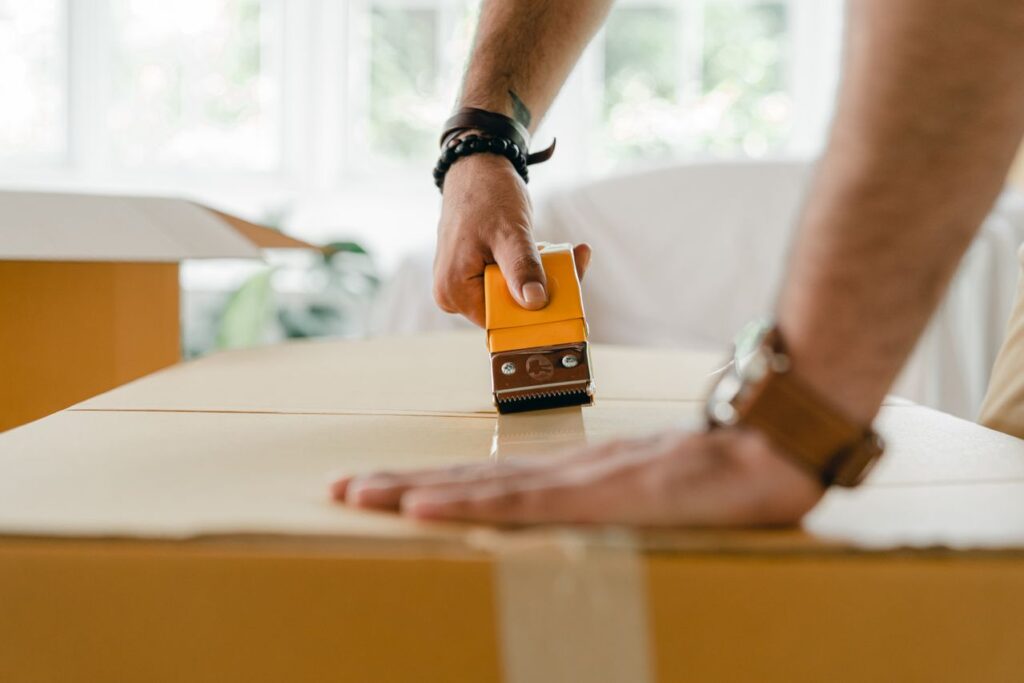
Moving to a new home is a major transition that’s exciting but riddled with logistical challenges. At Clean and Careful Moving, we appreciate that the foundation of a successful relocation begins with proper packing techniques. One of the most frequently overlooked aspects is knowing how to tape moving boxes for maximum protection and efficiency.
The integrity of your packed belongings depends on how effectively your moving boxes are secured. Professional movers know that proper box taping directly impacts the safety of transported items. This comprehensive guide shares our approach to box preparation, outlining the techniques our experienced team implements daily.
Quick answer: Tape the bottom seam first, then add two strips across each end to form an H. Use 2–3 inch packing tape, not masking or duct tape. Repeat the H on top and add a band around the middle of heavy boxes.
How to Tape a Moving Box, Step by Step
Our professional six-step approach ensures maximum protection during your move.
Step 1: Fold the bottom flaps closed
Begin with a flat box and fold the bottom flaps inward. Fold the smaller flaps first, followed by the larger ones, creating a closed surface.
Step 2: Tape the center seam
Apply one continuous strip of tape along the center seam where the two large flaps meet. Extend this tape approximately 2 to 3 inches up each side of the box for added strength.
Step 3: Add the H-tape strips
Apply two additional strips perpendicular to your center strip, creating an H pattern. This technique provides much more structural integrity than single-strip methods.
Step 4: Fill the box, heaviest items on the bottom
Pack items carefully, keeping the weight below 50 pounds whenever possible. Use appropriate cushioning materials between items and fill empty spaces to prevent shifting.
Step 5: Seal the top with the same H pattern
Close the top flaps in the same sequence used for the bottom. Apply identical H-pattern taping to ensure balanced structural integrity.
Step 6: Wrap a band around heavy boxes
For boxes containing denser items, apply an additional circumferential tape strip that wraps entirely around the box’s midsection, improving stability.
Pro Tip : Our professional packing service implements these techniques precisely while saving you considerable time and effort. Call (949) 375-4629 to learn more about our packing services.
What Tape and Supplies You Need
Before beginning the packing process, gather these essential supplies:
- Professional-grade packing tape : Invest in genuine moving-specific tape (typically 2 to 3 inches wide) with strong adhesive properties. Avoid common substitutes like masking tape (insufficient adhesive strength), duct tape (leaves residue and deteriorates), or bargain-brand clear tape (inadequate tensile strength).
- Tape dispenser/gun : This inexpensive tool dramatically improves application precision while protecting your fingers from painful cuts.
- Quality moving boxes : Uniform, clean boxes with consistent structural integrity improve packing efficiency. We offer professional-grade boxes in various sizes.
- Cutting implements : Keep scissors or box cutters accessible for precise tape trimming.
Common Box-Taping Mistakes
Understanding these frequent errors helps prevent them:
- Inadequate tape quality : Using lightweight or non-adhesive tapes virtually guarantees box failure during transit.
- Insufficient sealing coverage : Leaving corners or edges unsealed creates structural vulnerability points.
- Excessive box weight : Overloaded boxes compromise even the best taping techniques, creating hazards for both contents and movers.
- Single-strip application : Relying on minimal tape application increases the risk of failure during handling and stacking.
- Inappropriate tape type : Using specialty tapes (electrical or painter’s) not designed for cardboard adhesion and weight-bearing.
How to Tape Boxes for Fragile Items
When packing particularly delicate belongings, implement the following techniques:
- Double-box method : Place smaller, well-wrapped fragile items inside boxes that are then placed within larger boxes with cushioning material between layers.
- Reinforced bottom application : When boxes contain heavier, fragile items like dishware, apply additional tape strips in a grid pattern across the bottoms.
- Corner protection enhancement : Apply small tape reinforcements to box corners containing particularly valuable or fragile items.
- Internal stabilization : Use appropriate packing materials within boxes to prevent movement during transit.
Packing electronics too? See our guide to packing a flat-screen TV.
Pro Tips for Packing Day
Implement these professional techniques to make your packing process safer and more effective:
- Efficiency preparation : Pre-assemble several boxes before packing, creating an efficient workflow.
- Visual coding system : Implement color-coded labels or stickers to identify fragile contents, room destinations, or unpacking priorities.
- Comprehensive labeling protocol : Mark each box with its destination room, a general content description, special handling requirements, and unpacking priority level.
- Environmentally responsible options : Ask about our eco-friendly packing materials that maintain protection while reducing environmental impact.
Why Taping Boxes Right Matters
Understanding the importance of proper box taping can motivate you to implement these techniques correctly. Here are some handy pointers:
- Structural integrity preservation : Correctly taped boxes maintain their shape during transit, protecting contents from crushing or shifting.
- Stack stability enhancement : Properly sealed boxes create stable loading formations within moving vehicles, preventing dangerous shifts during transportation.
- Damage prevention : Well-secured boxes significantly reduce the risk of blowouts. These sudden structural failures can damage your belongings and nearby items.
- Professional impression : Quality packing demonstrates care and attention to detail throughout your moving process.
Improper box taping is one of the leading causes of item damage during residential relocations.
When to Hire Professional Packers
While many people successfully implement these taping techniques, certain situations warrant professional packing assistance:
Time constraints : When relocation timelines prevent thorough self-packing.
High-value items : When collections, antiques, or especially valuable belongings require specialized protection.
Physical limitations : When health considerations make packing activities challenging.
Complex relocations : When moving specialized equipment, unusual items, or managing complex logistics.
Our professional packing services implement all the techniques outlined above while providing efficiency and specialized materials. Request a packing consultation today!
Short on time? Our professional packing services cover every box, from dishes to electronics.
Tape with Care, Move with Confidence
While taping boxes might seem straightforward, implementing these professional techniques creates many advantages for your relocation experience. Properly secured boxes protect your belongings, improve moving efficiency, and reduce stress throughout the transition process.
At Clean and Careful Moving, our commitment to excellence begins with these fundamental packing principles and extends through every aspect of your relocation experience. Whether you choose to put these techniques into practice personally or engage our comprehensive packing services, we’re dedicated to ensuring your belongings arrive safely at your new home.
Contact us today to discuss how our professional moving services can support your upcoming relocation. Details matter, especially when they protect what matters most to you.
Call us : (949) 375-4629 Email us : cleancarefulmoving@gmail.com